


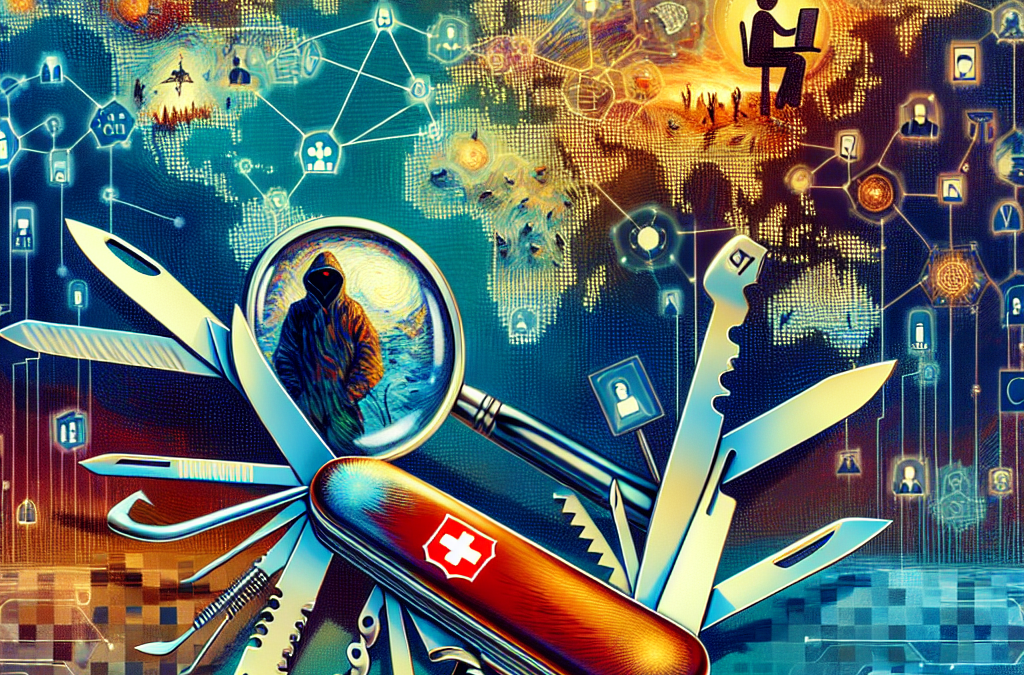
Harmonizing Risk: The Intersection Of Technology And Operations
By Tom Seest
At BestCyberSecurityNews, we help teach entrepreneurs and solopreneurs the basics of cybersecurity and its impact on their businesses by using simple concepts to explain difficult challenges.
Please read and share any of the articles you find here on BestCyberSecurityNews with your friends, family, and business associates.
When It Meets Ot – Managing Two Worlds Of Risk
When we think about risk, it often feels like a tug-of-war between two worlds: the digital landscape teeming with potential threats and the physical space where human instinct reigns. Cybersecurity isn’t just some high-tech jargon or an abstract concept—it’s the lifeblood of our modern existence. Picture this: you’re sitting at your favorite diner, savoring a cup of coffee while scrolling through the latest news. That very moment, your personal information could be under siege from distant corners of the globe. It doesn’t just affect you; it creeps into every relationship, every handshake, every piece of trust we build in our communities.
Let’s get real. When your data is breached, it’s not just numbers and letters on a screen; it’s your identity, your reputation, and sometimes, your livelihood. The emotional weight of that reality hits home. Take, for instance, a small business owner who meticulously built their establishment from the ground up. A successful cyberattack doesn’t just put their customer data at risk; it undermines the very foundation of their dreams and aspirations. That’s a hard pill to swallow.
Head-wise, we must ask ourselves: how do we bridge these two worlds? The answer requires vigilance and understanding. The line between the digital and physical is increasingly blurred, and acknowledging this intersection isn’t optional. It’s imperative. Implementing robust cybersecurity measures helps to establish a fortress around our vulnerabilities, transforming anxiety into a sense of control. You’re not just putting up digital walls—you’re empowering yourself and your community.
Ethically, the responsibility lies with all of us. We must recognize that each click, each email shared, and every password created shapes our world’s security. We have a collective duty to educate ourselves about these risks. Engage in discussions, attend workshops, become advocates for cybersecurity in your circle. It’s a call to arms, and we can’t turn a blind eye.
Your gut instinct knows when something feels off. Trust it. If you suspect a breach, act decisively. Vigilance isn’t just a buzzword; it’s a lifestyle choice. Building a culture of cybersecurity within our homes and communities means sharing knowledge, fostering connections, and encouraging action. Let’s navigate these two worlds together, fortified by the trust we build and the relationships we nurture. In this era, that’s not just practical; it’s necessary.

When It Meets Ot – Managing Two Worlds Of Risk
When It Meets Ot – Managing Two Worlds Of Risk
- Risk involves a tug-of-war between the digital realm of threats and the physical realm of human intuition.
- Cybersecurity is essential for our modern existence, affecting our daily lives, even in casual settings like a diner.
- A data breach impacts not just personal information but also identity, reputation, and livelihood.
- Small business owners are particularly vulnerable, as cyberattacks threaten their hard-earned achievements.
- Bridging the digital and physical worlds requires vigilance, understanding, and robust cybersecurity measures.
- Everyone has a responsibility to educate themselves about cybersecurity and engage in proactive discussions and actions.
- A culture of cybersecurity involves trusting instincts and building relationships centered around shared knowledge and vigilance.

When It Meets Ot – Managing Two Worlds Of Risk
Table Of Contents
- When It Meets Ot – Managing Two Worlds Of Risk
- What Emotional Impact Does a Cyber Attack Have on Our Workforce?
- How Can It and Ot Collaboration Enhance Operational Efficiency?
- What Ethical Considerations Arise When Merging It and Ot Systems?
- How Does a Breach In Ot Affect Our Overall Organizational Integrity?
- How Can Leadership Foster a Culture Of Risk Awareness In Both Realms?
- What Role Does Data Integrity Play In Mitigating Operational Risks?
- How Can We Balance Technological Advancements with Safety In Ot?
- Conclusion
- Other Resources
- Glossary Of Terms
- Other Questions
- Haiku
- Poem
- Checklist
What Emotional Impact Does a Cyber Attack Have on Our Workforce?
When a cyber attack strikes, it doesn’t just compromise data—it wriggles its way deep into the emotional fabric of our workforce. Picture this: a dedicated employee, pouring their heart and soul into their job, suddenly facing uncertainty and fear about their own role and the company’s future. The invisible hand of cybersecurity threats can trigger feelings of vulnerability, mistrust, and even anxiety. It’s not merely a technical breach; it breaches the very spirit of teamwork and collaboration that keeps a workplace thriving.
Rationally, we know the numbers: reduced productivity, increased turnover, and even the risk of physical health issues among stressed-out employees. This isn’t a hypothetical nightmare; it’s the lived reality for countless professionals who wake up each day, grappling not just with their workloads, but with the dread of “What if?” Each alarm that dings on their phone could be another reminder of a data breach, shattering their focus and draining morale.
Ethically, we have a responsibility to cultivate an environment where every individual feels safe and secure—not just in their jobs but in their entire well-being. The stories of colleagues who have endured the aftermath of a cyber breach echo in the halls, reminding us all of our shared vulnerabilities. These narratives transform an impersonal crisis into a deeply personal one, compelling us to respond not just as employees, but as human beings who genuinely care for one another.
As leaders and decision-makers, we have an authority to act. By prioritizing robust cybersecurity measures, we’re not just safeguarding data; we are protecting our workforce’s mental and emotional health. Taking decisive action fosters trust and instills confidence in employees, reassuring them that their livelihoods are valued and secure.
Ultimately, we are social creatures. Our connections—not only to our jobs but to each other—make us resilient. We must foster a culture of transparency, allowing open discussions about cybersecurity. When teammates can share their fears and concerns, they create a bond that not only strengthens the company but also transforms the landscape into one of hope.
So let’s recognize that behind every cyber threat, there are real people grappling with real emotions. Addressing those feelings with empathy and proactive measures isn’t just a policy decision; it’s a commitment to our greatest asset—the workforce that powers our dreams and our future. Together, let’s build a resilient community that stands strong, ready to take on any challenge that comes our way.

What Emotional Impact Does a Cyber Attack Have on Our Workforce?
What Emotional Impact Does a Cyber Attack Have on Our Workforce?
- Cyber attacks compromise not only data but also the emotional well-being of employees.
- Fear and uncertainty about job security can lead to vulnerability, mistrust, and anxiety among staff.
- Cyber incidents result in reduced productivity, higher turnover, and potential physical health issues.
- Employees often grapple with the looming dread of future breaches impacting their focus and morale.
- There is an ethical responsibility to create a safe environment for employees’ emotional and job security.
- Leaders must prioritize cybersecurity to protect the mental health of their workforce and build trust.
- Fostering a culture of transparency and open communication about cybersecurity strengthens team bonds.

What Emotional Impact Does a Cyber Attack Have on Our Workforce?
How Can It and Ot Collaboration Enhance Operational Efficiency?
When we talk about the collaboration between IT and OT, we’re diving into a powerful partnership that can transform the way companies operate. Imagine walking through a factory where machines hum in perfect harmony, guided by algorithms and data that optimize every movement, while real-time insights keep the cybersecurity fortifications strong. It’s more than just a team-up; it’s a marriage of technology and human intuition, where each side learns and grows from the other.
Now, let’s get real for a moment. Today’s industrial landscape is fraught with challenges—cyberattacks aren’t just threats; they’re an everyday possibility. The stakes are high, and an operation can’t afford to have its systems hacked, leading to costly downtimes or worse. By building a bridge between IT, which understands the intricacies of networks, and OT, which knows the heartbeat of machinery, businesses not only enhance operational efficiency but also fortify themselves against cyber threats.
This partnership means more than just streamlining processes; it embodies a cultural shift within organizations. When IT and OT speak the same language, it sparks innovation. Take a moment to picture entire teams united in purpose, brainstorming over a whiteboard, driven by a shared vision. Projects that once took months can be completed in weeks, and inefficiencies that felt insurmountable are tackled head-on. Suddenly, everyone feels connected to the same mission, fostering a workplace where every voice matters.
And let’s not forget the ethical responsibility. Our world is leaning heavily on technology, and with that comes a duty to ensure it serves us well. The collaboration of IT and OT helps us build systems that respect both people and resources. It’s about making informed decisions that not only boost productivity but also prioritize safety and security.
Now, close your eyes and envision the future—where skilled technicians work in tandem with savvy data analysts. This is where the magic happens. By investing in collaborative training, businesses move confidently toward a brighter horizon, proving that when we trust one another and share our strengths, we can conquer anything.
In this brave new world, an efficient operation isn’t just about profit margins and outputs, but about people who come together, each bringing their expertise to create something greater than the sum of its parts. When IT and OT unite, we don’t just enhance operational efficiency; we ignite a revolution rooted in trust, resilience, and a better tomorrow.

How Can It and Ot Collaboration Enhance Operational Efficiency?
How Can It and Ot Collaboration Enhance Operational Efficiency?
- Collaboration between IT and OT can transform company operations.
- Integration optimizes machine performance using algorithms and data, enhancing cybersecurity.
- The partnership fosters innovation and a cultural shift by aligning IT and OT goals.
- Bridging IT and OT enhances operational efficiency and fortifies against cyber threats.
- Collaboration accelerates project timelines and tackles inefficiencies, promoting teamwork.
- Ethical responsibility arises in leveraging technology to prioritize safety and resources.
- Investing in training for IT and OT collaboration leads to a stronger, united workforce.
How Can It and Ot Collaboration Enhance Operational Efficiency?
What Ethical Considerations Arise When Merging It and Ot Systems?
When it comes to merging IT and OT systems, we’re not just dealing with bits and bytes or the latest software updates. We’re stepping into a realm where the heart, head, and gut collide, raising ethical considerations that are as deep as they are complex. Picture this: a factory floor buzzing with machinery, each piece connected to a vast web of IT infrastructure. It’s a marvel of modern efficiency, but it also raises the crucial question: What happens when that network is compromised? Cybersecurity becomes not just a technical challenge but a moral obligation.
At first glance, the merger of IT and OT systems promises boundless innovation, but it also introduces vulnerabilities that can have real-world consequences, affecting the lives of workers and the safety of communities. Consider the stakes. An unsecured system could lead to catastrophic failures that harm employees or even the environment. It’s easy to get lost in the metrics and efficiencies, but remember that behind every line of code is a human being, and behind every failure, a community that could suffer. The narrative shifts from the sterile boardroom to human stories—families, livelihoods, and futures.
We have to strike a balance between progress and responsibility. Rational thinking tells us that the integration of these systems can lead to significant advancements, yet it is our ethical duty to ensure that those advancements don’t come at an unacceptable cost. Compliance with safety standards and regulations is just the tip of the iceberg; true commitment involves creating an ethos of safety and accountability within organizations.
It’s not solely a task for IT professionals either; it’s a collective responsibility that spans every level of an organization—engineers, managers, even stakeholders. We must cultivate a culture that prioritizes ethical decision-making and understands the ramifications of each action, fostering trust among employees and the wider community. When every member of the team feels empowered to speak up about potential risks, we strengthen the social fabric of our workplaces.
Let this be a call to action. Embrace the challenges of merging IT and OT systems as opportunities to elevate ethical dialogue. Together, let’s build systems that not only innovate but also inspire confidence and safety for all. This isn’t just about technology; it’s about making choices that resonate with our values, nurturing a future where progress and ethics walk hand in hand.

What Ethical Considerations Arise When Merging It and Ot Systems?
What Ethical Considerations Arise When Merging It and Ot Systems?
- Merging IT and OT systems involves complex ethical considerations beyond just technical challenges.
- Cybersecurity is a moral obligation, as compromised networks can have real-world implications for workers and communities.
- Unsecured systems can lead to catastrophic failures affecting employees and the environment, emphasizing the human impact behind technology.
- Balancing progress with responsibility is crucial, ensuring advancements do not come at unacceptable costs.
- Creating a culture of safety and accountability involves more than compliance; it’s about fostering ethical decision-making at all organizational levels.
- All employees, from engineers to stakeholders, have a collective responsibility to prioritize safety and trust within their organizations.
- Encouraging ethical dialogue in the integration of IT and OT systems is essential for building confidence in technology and its effects on society.

What Ethical Considerations Arise When Merging It and Ot Systems?
How Does a Breach In Ot Affect Our Overall Organizational Integrity?
A breach in operational technology (OT) can feel like a punch to the gut for any organization. Imagine your company is humming along, like a well-oiled machine, and suddenly, an unseen hand reaches in, disrupting everything. Those unseen hands are digital threats in a world increasingly reliant on technology. The implications of such a breach extend far beyond the immediate chaos; they challenge our overall organizational integrity.
When an organization faces a breach, it’s not just about the technical details or restoring systems. It’s about trust—a trust built over years with employees, customers, and partners. The heart of your organization beats in rhythm with that trust. When it falters, so does morale. Employees begin to worry about their job security, customers wonder if their information is safe, and partners start questioning the validity of the relationship. Here’s where our gut feeling kicks in: we know that security is paramount. But what happens when that foundational element is shaken?
Rationally, we recognize the complexity of cybersecurity. A breach in OT can lead to production halts, financial losses, and legal ramifications. It’s not just numbers on a page; it represents real people’s livelihoods and future opportunities. Ethical leadership demands that we protect our systems, our employees, and our customers from harm. Every breach, big or small, forces organizations to confront their culture and values. Are we protectors or just players in this game of chance?
We like to think of ourselves as part of a larger community, one where shared values guide our actions. When a breach occurs, the ripple effect is real. It sends shockwaves through not just the company but the industry as a whole. Competitors can become targets of scrutiny and distrust because of the failings of one.
Using the authority that comes from shared experiences, we can mitigate these risks through improved cybersecurity practices, training, and building a culture of vigilance. It’s about rallying together and understanding that we are part of a collective that thrives on integrity and trust. When we operate with transparency and accountability, we fortify our defenses—not only against digital threats but against the very human consequences that follow.
In this interconnected world, integrity isn’t just a buzzword; it’s the foundation. So let’s engage with this reality. Take action, strengthen your defenses, and remember: a breach in OT affects us all. Together, we can foster resilience and recover our organizational spirit.

How Does a Breach In Ot Affect Our Overall Organizational Integrity?
How Does a Breach In Ot Affect Our Overall Organizational Integrity?
- A breach in operational technology (OT) disrupts organizational integrity and can have far-reaching implications.
- Trust is essential for organizational morale, impacting employees, customers, and partners during a breach.
- A cybersecurity breach can lead to significant production halts, financial losses, and legal issues.
- Ethical leadership is crucial in protecting systems and people from harm, reflecting organizational culture and values.
- The ripple effect of a breach can extend beyond the company, affecting industry-wide trust and scrutiny.
- Improved cybersecurity practices, training, and a culture of vigilance are necessary to mitigate risks.
- Integrating integrity as a core value enables organizations to strengthen defenses and foster resilience collectively.

How Does a Breach In Ot Affect Our Overall Organizational Integrity?
How Can Leadership Foster a Culture Of Risk Awareness In Both Realms?
In the digital landscape, where the virtual world mirrors the complexities of our daily lives, fostering a culture of risk awareness isn’t just a managerial challenge—it’s a moral imperative. As leaders, we must steer our teams through the storm of uncertainty that encompasses cybersecurity threats, inspiring vigilance and resilience. It’s not merely about protecting our data; it’s about safeguarding the livelihoods of those who depend on it. When team members understand the weight of their responsibilities, they become more than just employees; they transform into stewards of safety.
Picture this: a crew working late into the night, passionate about achieving a common goal, oblivious to lurking dangers. They trust their tools and each other. Yet, without a risk-aware mindset, that trust could crumble overnight. Effective leadership communicates that cybersecurity isn’t an afterthought—it’s woven into the very fabric of our daily tasks. When leaders share stories of near misses or lessons learned from previous blunders, they spark a shared sense of purpose. These narratives resonate deeply, reminding us that each person plays a crucial role in protecting the collective.
Now, let’s talk numbers. The reality is that a single cyber breach can cost companies millions, but it’s not just money we’re talking about; it’s reputation, customer loyalty, and trust. Equip your people with the knowledge they need to recognize red flags. Encourage open dialogue about vulnerabilities. Invest time in training that goes beyond compliance—make it engaging, relatable, actionable. When employees feel equipped, they’re more likely to act decisively when risks arise. They become proactive defenders, not passive participants.
But here’s the kicker: creating a culture of risk awareness also fortifies the ethical foundation of your organization. When leadership promotes transparency and accountability, employees feel empowered to speak up—creating an environment where everyone is committed to a common cause. This unity cultivates a supportive social structure that not only fortifies defenses but also fosters loyalty.
In this digital age, we have a choice. We can educate and inspire, nurturing a culture where risk awareness thrives. The path may be daunting, but the reward is unmistakable. Together, through shared responsibility and unwavering commitment, we can stand resolute against the uncertainties of cybersecurity. Let’s engage our hearts and minds, because together, we can traverse this uncharted territory and pave the way for a safer tomorrow.

How Can Leadership Foster a Culture Of Risk Awareness In Both Realms?
How Can Leadership Foster a Culture Of Risk Awareness In Both Realms?
- Fostering a culture of risk awareness is a moral imperative for leaders in the digital landscape.
- Effective leadership instills vigilance and resilience within teams to combat cybersecurity threats.
- Understanding responsibilities transforms employees into stewards of safety.
- Effective communication of cybersecurity as integral to daily tasks strengthens collective purpose.
- Investing in engaging training equips employees to recognize risks and act decisively.
- Promoting transparency and accountability empowers employees to speak up and reinforces unity.
- A commitment to risk awareness paves the way for a safer digital future through shared responsibility.

How Can Leadership Foster a Culture Of Risk Awareness In Both Realms?
What Role Does Data Integrity Play In Mitigating Operational Risks?
When you think about the backbone of any organization, you might picture the busy hands that keep everything running smoothly—dedicated workers who arrive early and stay late, driven not just by paycheck but by purpose. Yet, lurking behind every interaction, every decision, there’s an unseen guardian: data integrity. It’s the quiet hero that stands guard against operational risks, ensuring that the wheels of progress don’t come off the tracks.
Picture this: a bustling factory floor where employees craft products with pride. Now imagine a brake failure due to compromised data, leading to a near catastrophe. It’s in moments like these that we realize the true value of solid data integrity. When information is accurate and trustworthy, everyone—management, staff, and customers—can make informed decisions. They have the confidence to innovate, to take calculated risks, and to forge ahead into the unknown.
Data integrity ensures that every scrap of information—be it inventory counts, financial forecasts, or customer feedback—is reliable. When data is consistent and credible, the entire organization becomes a fortress against the chaotic unpredictability of the world. Employees feel empowered, shareholders are reassured, and consumers develop loyalty, not just because they love a product, but because they trust the company behind it.
Now let’s layer in a more pressing concern: cybersecurity. In an age when cyber threats loom larger than ever, organizations that neglect data integrity may as well be inviting danger through their front door. Data breaches don’t just result in lost revenue; they erode trust and tarnish reputations painstakingly built over years. When a company prioritizes data integrity, it signals to both employees and customers that they are committed to protecting their interests. There’s an ethical responsibility at play here—a promise that the information which fuels their lives is safeguarded against malevolent forces.
And so, as we navigate this complex landscape, let’s remember that data integrity is not just a checkbox on a compliance list. It’s a call to action for every professional, from the factory floor to the boardroom. Together, let’s foster an environment where every byte is revered as a building block of our shared journey, consolidating a stronger future where operational risks are mitigated and dreams are realized.

What Role Does Data Integrity Play In Mitigating Operational Risks?
What Role Does Data Integrity Play In Mitigating Operational Risks?
- Data integrity serves as the unseen guardian of organizations, protecting against operational risks.
- Reliable data enables informed decision-making for management, staff, and customers.
- Accurate information fosters innovation and confidence in taking calculated risks.
- Consistent and credible data creates a strong organizational foundation and builds consumer trust.
- Neglecting data integrity invites cybersecurity threats, leading to potential data breaches.
- Prioritizing data integrity demonstrates a company’s commitment to safeguarding employee and customer interests.
- Data integrity is essential for fostering a culture of responsibility and ensuring a strong, secure operational future.

What Role Does Data Integrity Play In Mitigating Operational Risks?
How Can We Balance Technological Advancements with Safety In Ot?
In the world of operating technology, the road ahead is paved with groundbreaking innovations, yet it often feels like we’re walking a tightrope. Balancing the thrill of rapid advancements with the solid ground of safety is not just a technical challenge—it’s a human narrative that resonates deeply within each of us. Imagine the exhilaration of a new robotic surgical tool capable of precision that makes a heart’s pulse quicken. Now, picture the fears lurking in the shadows—cybersecurity threats that could tailgate right behind those innovations, seeking to exploit vulnerabilities.
For every leap we take into a brighter future, there’s a need to tread thoughtfully, recognizing that each pixel of progress comes with responsibilities. It’s not just a matter of code and circuitry; it’s about lives influenced and outcomes altered. When we rely on complex systems without a plan for safety, the impact can ripple outward, touching families, communities, and entire hospitals. This isn’t just another tech discussion; it’s a people-centered dialogue where trusting our advancements means creating safeguards that resonate with our ethical duty to protect those we serve.
We should feel a gut check every time we welcome new tech into the operating room. The question isn’t just, “Can we?” but “Should we?” And the answer has to engage both our intellect and our heart. As we navigate through uncharted territories, the ethos of safety must guide us—because it’s not simply about preventing a breach; it’s about respecting the lives that depend on the decisions we make.
Think back to those moments when you were confronted with a choice that impacted more than just you. Remember that connection? The trust that springs from putting safety first not only fosters confidence but shapes a collective ethos. Our innovations hold promise, yes, but they also come with an obligation to uphold the very sanctity of life we’re trying to enhance. As we advance into this brave new world, let’s strive to forge a path where the brilliance of technology walks hand in hand with unwavering safety, where each heartbeat—whether it belongs to a patient or a surgeon—is prioritized above all.
It’s not just technology we’re elevating; it’s humanity. And that’s the mission we all share.

How Can We Balance Technological Advancements with Safety In Ot?
How Can We Balance Technological Advancements with Safety In Ot?
- The operating technology landscape is filled with groundbreaking innovations that require careful balance between progress and safety.
- Advancements like robotic surgical tools bring excitement but are accompanied by potential cybersecurity threats.
- Each technological advancement carries responsibilities that impact lives, families, and communities.
- This conversation goes beyond technical aspects; it emphasizes a people-centered dialogue focused on ethical duties.
- As new technologies enter operating rooms, we must question not only the feasibility but also the appropriateness of their use.
- Trust and safety are essential, as decisions made affect not only individuals but also the collective well-being.
- The goal is to align technological brilliance with unwavering safety, prioritizing the sanctity of life in all advancements.

How Can We Balance Technological Advancements with Safety In Ot?
Conclusion
In the ever-evolving world of risk management, we find ourselves at a crucial intersection, blending the realms of technology and operations. The stakes are higher than they’ve ever been. When you pull back the curtain on the digital landscape, you see it’s not just a realm of ones and zeroes—it’s a living, breathing ecosystem that impacts every single one of us. A breach doesn’t just compromise data; it threatens relationships built on trust, whether with customers, employees, or the communities we serve. Each time a personal piece of information slips away, our very identities are endangered. For a small business owner, a successful cyberattack doesn’t only put data at risk; it jeopardizes dreams and aspirations nurtured over years.
As we engage our rational minds, we must acknowledge that bridging the divide between the digital and the physical isn’t just a checkbox on a corporate strategy. It’s a collective responsibility that demands vigilance, understanding, and action. Implementing robust cybersecurity measures isn’t merely about constructing digital fortresses; it’s about empowering individuals with knowledge and the tools to safeguard themselves and their communities. It’s a call to arms—a shared duty to educate ourselves and those around us about the risks we face daily.
But what about the emotional impact? When cyber threats loom, they don’t just disrupt business; they invade the hearts of our workforce, sparking anxiety and mistrust. A culture of openness enables employees to voice concerns, fostering a united front against potential risks. This transparency builds not only resilience but also loyalty, transforming our workplaces into sanctuaries of support amidst uncertainty.
Ethically, this is a pivotal moment where leadership plays a crucial role in nurturing a culture of risk awareness. It’s not about blame; it’s about collective growth and proactive engagement. Leaders must embed the principles of accountability and safety into the very fabric of their organizations—inviting everyone to contribute to a larger mission of safeguarding both data and dignity.
Ultimately, we’re not merely navigating a technological landscape; we’re building a future rooted in trust, integrity, and shared responsibility. As we advance, let’s carry with us the understanding that every decision we make impacts not just systems but lives. Together, we can forge a path toward innovation that prioritizes safety and humanity. Embracing this journey isn’t just practical—it’s an ethical imperative. When we unite in purpose, we not only defend against risks; we redefine the essence of collaboration and community. As we tread this uncharted territory, let’s do so with our hearts, heads, and guts firmly aligned, ensuring that as we rise, we rise together.

Conclusion
Conclusion:
- The intersection of technology and operations in risk management is increasingly crucial.
- A data breach compromises trust and personal identities, impacting businesses and communities.
- Bridging the digital-physical divide requires collective responsibility, vigilance, and action.
- Robust cybersecurity measures empower individuals with knowledge and tools for protection.
- Cyber threats create anxiety and mistrust; fostering a culture of openness helps build resilience.
- Leadership plays a vital role in nurturing a culture of risk awareness and accountability.
- Every decision made in this landscape affects lives, making safety and humanity essential in innovation.

Conclusion
Other Resources

Other Resources
Here is a list of other resources you can review online to learn more:
- Cybriant
- IND Corporation
- ProCircular
- The SCE Group
- Netsecuris
- ECS Federal, LLC
- Birch Cline Cybersecurity
- Unisys
- SOCSoter
- NTT Ltd.
- Lehigh Valley Technology
- Infopercept Consulting
- Protos Security
- Spectrumwise
- Accenture
- Xantrion
- Network Computer Solutions
- CI Security
- Abacode
Use This Prompt To Get More Resources With Your Favorite Online AI Tool: Please provide me with a list of online articles with their URLs in a bulleted list that I can read regarding When It Meets Ot – Managing Two Worlds Of Risk

Other Resources
Glossary Terms
When It Meets Ot – Managing Two Worlds Of Risk – Glossary Of Terms
1. IT (Information Technology): The use of computers and software to manage and process information, typically found in office environments.
2. OT (Operational Technology): Hardware and software that detects or causes changes through direct monitoring and control of physical devices, often used in industrial environments.
3. Cybersecurity: Measures taken to protect computer systems and networks from theft, damage, or unauthorized access.
4. Risk Management: The process of identifying, assessing, and controlling threats to an organization’s capital and earnings.
5. Convergence: The integration of IT and OT systems to enhance efficiency, promote innovation, and streamline operations.
6. Data Integrity: The accuracy and consistency of data over its lifecycle, crucial for effective decision-making in both IT and OT.
7. Incident Response: The approach organizations take to prepare for, detect, contain, and mitigate cybersecurity incidents.
8. Network Segmentation: Dividing a computer networking into smaller, manageable segments to enhance security and performance.
9. IoT (Internet of Things): A network of interconnected devices that collect, exchange, and analyze data over the internet.
10. Supply Chain Risk: Potential threats to the flow of goods and services in the supply chain, influenced by both IT and OT environments.
11. Vulnerability Assessment: The process of identifying, quantifying, and prioritizing vulnerabilities in systems.
12. Compliance: Adherence to laws, regulations, and guidelines that govern cybersecurity and operational protocols.
13. Automation: The use of technology to perform tasks with minimal human intervention, often applied in OT environments.
14. Legacy Systems: Older software or hardware that may be outdated but still in use, often posing security risks.
15. Threat Intelligence: Information that helps organizations understand potential security threats and respond proactively.
16. SCADA (Supervisory Control and Data Acquisition): A system used for controlling industrial processes locally or at remote locations.
17. Denial of Service (DoS): A cyber-attack aimed at making a machine or network resource unavailable to its intended users.
18. Penetration Testing: Simulated cyber-attack against a system to check for exploitable vulnerabilities.
19. Access Control: Security measures that determine who can view or use resources in a computing environment.
20. Incident Management: The practices and procedures for handling incidents to ensure service continuity and minimize impact.
21. Malware: Malicious software designed to harm, exploit, or otherwise compromise computer systems.
22. Phishing: A method of trying to gather personal information using deceptive emails and websites.
23. Operational Resilience: The ability of an organization to continue operations during and after a disruptive event.
24. Change Management: A structured approach to transitioning individuals, teams, and organizations to a desired future state.
25. Business Continuity: Planning and preparation to ensure that an organization can continue to operate in the event of a disruption.
26. Threat Modeling: The process of identifying potential threats and vulnerabilities in a system to improve security.
27. Risk Assessment: The overall process of evaluating risks to understand potential impacts and determine mitigation strategies.
28. Firewalls: Security systems that monitor and control incoming and outgoing network traffic based on predetermined security rules.
29. Interoperability: The ability of different systems, devices, or applications to communicate and work together effectively.
30. Digital Twin: A virtual representation of a physical object or system used for monitoring and simulation purposes in both IT and OT.

Glossary Of Terms
Other Questions
When It Meets Ot – Managing Two Worlds Of Risk – Other Questions
If you wish to explore and discover more, consider looking for answers to these questions:
- What are the main risks associated with merging IT and OT systems?
- How can organizations measure the effectiveness of their cybersecurity measures?
- What training is necessary to ensure employees are prepared for potential cyber threats?
- What role does communication play in fostering a culture of cybersecurity awareness?
- How can small businesses protect themselves against cyber threats?
- What are the best practices for implementing effective cybersecurity in both IT and OT environments?
- What legal ramifications can arise from a cybersecurity breach?
- How do we ensure that technology advancements do not compromise ethical standards?
- What specific actions can leadership take to promote transparency around cybersecurity risks?
- How can organizations create a collaborative environment between IT and OT teams?
- What strategies can help strengthen trust amid a cybersecurity breach?
- How does organizational culture influence employee behavior regarding cybersecurity?
- What frameworks exist for assessing ethical considerations in technology use?
- How can organizations prepare for the emotional impact of cybersecurity incidents on their workforce?
- What innovations in technology can enhance both safety and efficiency in operational technology?

Other Questions
Haiku
When It Meets Ot – Managing Two Worlds Of Risk – A Haiku
Facing the unknown,
Connections forged in safety,
Together we rise.

Haiku
Poem
When It Meets Ot – Managing Two Worlds Of Risk – A Poem
In a world where shadows lurk and bytes collide,
We navigate the delicate dance of trust and pride.
From the diner’s warmth to factories’ might,
Cyber threats creep in, blurring day into night.
Emotions swirl—identity, reputation, at stake,
For a small business owner, it’s a dream they could break.
When vulnerabilities rise, we feel an aching weight,
Yet, knowledge and action can turn the tide of fate.
In this digital maze, we must unite our voices,
Bridging IT and OT, we blossom through choices.
The hum of machinery, the pulse of our team,
Together we craft a resilient dream.
Ethics beckon us, a moral call to defend,
Every click, every share—our futures depend.
Fostering a culture where fear meets resolve,
We empower each other, together we evolve.
As breaches pierce the heart, the fabric unravels,
Building bonds of support helps us handle the rattles.
In leadership’s hands lies the power to inspire,
To transform every doubt into a collective fire.
Data integrity guards the fortress we build,
With trust as our foundation, every challenge is fulfilled.
As technology races forth, let safety be our guide,
For in caring for humanity, our true strength resides.
So let’s tread boldly, blending wisdom, heart, and grit,
In this journey of progress, let’s commit to our fit.
Together we stand, ready to face any storm,
In a world intertwined, let unity be our norm.

Poem
Checklist
When It Meets Ot – Managing Two Worlds Of Risk – A Checklist
Risk Management Checklist: Bridging the Digital and Physical Realms
Emotional Appeals
_____ Acknowledge the Human Impact: Share stories of how cybersecurity affects individuals, communities, and workplaces.
_____ Cultivate Trust: Foster an environment where employees feel safe sharing concerns about security.
_____ Promote Well-Being: Encourage practices that support mental health in the face of potential cyber threats.
Rational Appeals
_____ Assess Vulnerabilities: Conduct regular audits of both IT and OT systems to identify potential risks.
_____ Implement Training: Offer comprehensive cybersecurity training that goes beyond compliance, making it engaging and relevant.
_____ Measure Impact: Track productivity and morale before and after implementing cybersecurity measures.
Ethical Appeals
_____ Champion Collective Responsibility: Encourage every team member to take part in creating a culture of cybersecurity.
_____ Adhere to Standards: Ensure compliance with safety regulations and ethical guidelines in both IT and OT.
_____ Foster Open Dialogue: Promote transparency about risks and decision-making processes to build community trust.
Authority Appeals
_____ Leverage Expertise: Consult cybersecurity professionals to guide strategy and training efforts.
_____ Highlight Leadership Commitment: Make organizational leaders the face of cybersecurity initiatives to demonstrate accountability.
_____ Share Success Stories: Present case studies where strong cybersecurity has led to positive outcomes.
Narrative Appeals
_____ Create Relatable Scenarios: Use real-life scenarios to illustrate the consequences of breaches, making it personal.
_____ Tell Success Stories: Share narratives of organizations that successfully integrated IT and OT for enhanced security.
_____ Correlate Technology and Humanity: Highlight stories that connect technological advancements with their impact on physical safety.
Social Appeals
_____ Build a Community: Foster connections among colleagues to share knowledge and strategies about cybersecurity.
_____ Encourage Peer Engagement: Promote discussions that allow employees to share experiences and learn from each other.
_____ Inspire Advocacy: Motivate employees to become advocates for cybersecurity practices in their personal and professional networks.
Implementing this checklist can help organizations better align their cybersecurity strategies with the emotional, rational, and ethical dimensions of risk management, creating a holistic approach to safeguarding both digital and physical realms.

Checklist
At BestCyberSecurityNews, we help teach entrepreneurs and solopreneurs the basics of cybersecurity and its impact on their businesses by using simple concepts to explain difficult challenges.
Please read and share any of the articles you find here on BestCyberSecurityNews with your friends, family, and business associates.


