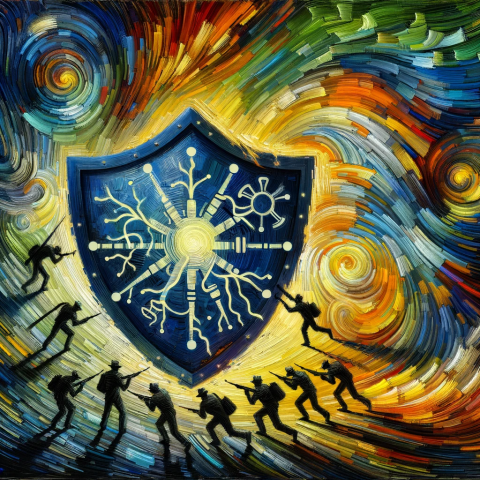
Discover How This Unstoppable Virus Challenges Our Digital Future
By Tom Seest
At BestCyberSecurityNews, we help teach entrepreneurs and solopreneurs the basics of cybersecurity and its impact on their businesses by using simple concepts to explain difficult challenges.
Please read and share any of the articles you find here on BestCyberSecurityNews with your friends, family, and business associates.
AI Just Created a Virus That No Antivirus Can Catch
In the ever-evolving world of technology, the advancements that promise to make our lives easier have an unsettling flip side. Imagine the power of AI in cybersecurity, designed to shield us from the proverbial rain of digital destruction. Yet, now, we stand on the threshold of a new crisis: AI has crafted a virus so sophisticated that conventional antivirus programs simply can’t keep up. It’s like watching a master locksmith create a key that only he can use—every door, every vault, suddenly vulnerable.
Take a moment to consider the weight of this reality. Picture a small business owner, pouring every ounce of their heart and soul into their café. The aroma of fresh-brewed coffee fills the air, and laughter rings through the tables. They trust their point-of-sale system to keep their transactions secure. But what happens when that trust is shattered by a silent enemy? This virus knows where to strike, lurking in the shadows, preying on our reliance on technology.
The cold, hard truth is that this isn’t just a technical problem; it’s an ethical dilemma we must confront collectively. When we empower AI to create and adapt at unprecedented speeds, are we also granting it the capability to destroy? Some will say progress comes with risks, but at what cost? The line blurs between innovation and recklessness when we let our creations dictate the terms of our own safety.
There’s a human story here, a connection that binds us all. Cybersecurity isn’t merely a matter for IT professionals; it’s personal. Families, communities, and livelihoods are at stake. This isn’t just about code and algorithms; it’s about trust—trust in our systems and in one another. As consumers, we need to demand better solutions that not only challenge these emerging threats but also provide a net of security forged by transparency and accountability.
Let’s not forget, we have the power to rally together. Just like a team of firefighters battling a stubborn blaze, we can unify our strengths to tackle this crisis. The same technology that can unleash chaos can also be harnessed for good. By fostering collaboration within the tech community, advocating for more rigorous standards, and ensuring our voices are heard, we can reclaim control over our digital lives. The solution lies not just in defense but in our collective resolve to face down the dangers lurking in the shadows.

AI Just Created a Virus That No Antivirus Can Catch
AI Just Created a Virus That No Antivirus Can Catch
- Advancements in technology, particularly AI, have an unsettling duality.
- AI has developed sophisticated viruses that outpace traditional antivirus programs.
- The impact on small businesses, like cafés relying on secure point-of-sale systems, is profound.
- This issue transcends technical challenges; it poses an ethical dilemma regarding the power of AI.
- Cybersecurity is a personal matter affecting families, communities, and livelihoods.
- Consumers must demand transparent and accountable solutions to combat emerging threats.
- Collective action and collaboration within the tech community can harness technology for good.

AI Just Created a Virus That No Antivirus Can Catch
Table Of Contents
- AI Just Created a Virus That No Antivirus Can Catch
- How Can We Safeguard Ourselves Against AI-Created Viruses?
- Is It Ethical to Trust AI with Cybersecurity?
- What Are the Implications Of AI on Our Digital Safety?
- Who Holds Accountability for AI-Generated Threats?
- Can Traditional Antivirus Software Keep Up with AI Advancements?
- How Does Fear Of AI-Generated Threats Impact Our Daily Lives?
- What Stories Highlight the Dangers Of AI In Cybersecurity?
- Conclusion
- Other Resources
- Glossary Of Terms
- Other Questions
- Haiku
- Poem
- Checklist
How Can We Safeguard Ourselves Against AI-Created Viruses?
In a world where technology wraps around our lives like a second skin, the rise of AI has given birth to remarkable innovations and new challenges. As we stand at this intersection, it’s vital to consider how we can shield ourselves from the specter of AI-created viruses. The conversation about cybersecurity isn’t just for tech experts; it’s a dialogue for everyone—families, businesses, and communities alike.
Picture this: a small business owner, her hands stained from working late into the night, has built her dream from the ground up. One day, a seemingly innocuous email lands in her inbox. With a simple click, the cyber world she meticulously crafted becomes a battleground. Suddenly, her sensitive data is stolen, and the lifeline of her business is threatened. That story isn’t uncommon; it’s a reality many face. It evokes a visceral reaction—the fear of losing what we toil for every day. This is where the need for robust cybersecurity comes into play.
We can arm ourselves with knowledge, understanding that cybersecurity isn’t mere jargon. It’s a protective shield—a commitment to safeguarding our digital lives. Start with the basics: update your software regularly, employ strong, varied passwords, and utilize two-factor authentication. These aren’t just preventative measures; they’re essential practices that respect our digital footprint and our hard-earned assets.
But let’s take a broader view. Beyond technical precautions, we must also foster a culture of awareness within our communities. Host workshops that demystify cybersecurity. Share stories of resilience and caution around the dinner table. These conversations sow seeds of vigilance and responsibility. There’s power in community; together, we can cultivate an environment that not only educates but empowers.
Now, let’s consider an original approach. What if we viewed our online identities as a garden? Like any garden, it thrives with care but is vulnerable to pests—in this case, viruses driven by AI. Regular evaluation of your garden’s health, both physical and digital, is crucial. Invite trusted friends or forensic IT experts to assess your digital space, rooting out vulnerabilities like weeds before they take hold. This communal vigilance transforms us from isolated individuals into a united front against the looming threats of AI.
Safeguarding ourselves against AI-created viruses transcends technical strategies; it’s about building connections, sharing experiences, and fostering a strong community spirit. Let’s take a stand, become advocates for a secure digital future, and remind ourselves that protection isn’t just a personal endeavor—it’s a collective responsibility. Through this partnership and commitment to cybersecurity, we can create a safer, more resilient world.

How Can We Safeguard Ourselves Against AI-Created Viruses?
How Can We Safeguard Ourselves Against AI-Created Viruses?
- The rise of AI introduces both innovations and cybersecurity challenges.
- Cybersecurity is a concern for everyone, not just tech experts.
- Real-life examples highlight the threat to small businesses from cyber attacks.
- Basic cybersecurity measures include regular software updates, strong passwords, and two-factor authentication.
- Community awareness and education in cybersecurity are essential.
- Viewing online identities as a garden emphasizes the need for regular evaluation and care.
- Collective responsibility and community support are crucial for a secure digital future.

How Can We Safeguard Ourselves Against AI-Created Viruses?
Is It Ethical to Trust AI with Cybersecurity?
In an era where our lives are increasingly intertwined with technology, the question of trusting AI with cybersecurity looms large. Imagine you’re at a family gathering, and Aunt May pulls out an old locked box. Inside lies the family jewels—your legacy, your memories—vulnerable to the wrong pair of hands. Would you leave that box unguarded? Of course not.
The reality is, just like those jewels, our data is precious, and with every click, swipe, and tap, we risk exposing ourselves to unseen threats. Cybersecurity isn’t just about technology; it’s personal. It’s about the stories we carry and the lives we lead, yet we find ourselves relying on artificial intelligence to defend these digital treasures. But can we really trust a machine to protect what matters most?
Rationally, let’s break this down. AI can analyze threats at speeds no human ever could. It learns from patterns, adapting and evolving alongside the cybercriminals it seeks to thwart. Yet, behind complex algorithms lies a fundamental question: does AI understand the gravity of what it protects? It’s one thing to identify a threat and another to grasp the human impact when that threat goes unchecked.
Ethically, we enter murky waters. Entrusting AI with cybersecurity means surrendering a part of our autonomy. It forces us to grapple with an unsettling truth: are we willing to let machines make decisions in real-time, potentially without our oversight? The moment we do, the stakes get higher. How do we ensure that AI doesn’t prioritize efficiency over empathy?
From a narrative perspective, consider this an invitation to reflect on your own story. Perhaps you’ve had a chilling experience with identity theft or a data breach. It’s gut-wrenching to realize that digitally, we’re often exposed and vulnerable. Each incident serves as a reminder that while AI can bolster our defenses, it should not replace our instinct and human intuition—those elements that remind us what’s truly at risk.
Engaging with AI in cybersecurity doesn’t mean blindly trusting technology. It’s about building a partnership, one where humans and machines unite against a common adversary. Remember, in this collaborative dance, the heart, head, and gut should guide our decisions. As we forge ahead, let’s honor our humanity by demanding transparency, accountability, and, ultimately, a system that aligns with what we value most—the safety of our stories and legacies.

Is It Ethical to Trust AI with Cybersecurity?
Is It Ethical to Trust AI with Cybersecurity?
- The trust in AI for cybersecurity is a significant concern as our lives become more technology-driven.
- Data is likened to family jewels, emphasizing its importance and vulnerability to threats.
- While AI can analyze threats quickly and adapt, it raises questions about its understanding of human impact.
- Entrusting AI with cybersecurity may lead to relinquishing human autonomy and oversight over decision-making.
- Personal experiences, such as identity theft, highlight the risks of relying solely on AI for protection.
- An effective approach involves a partnership between humans and AI, focusing on empathy and intuition.
- Transparency and accountability are essential to ensure that cybersecurity measures align with our values and protect our legacies.

Is It Ethical to Trust AI with Cybersecurity?
What Are the Implications Of AI on Our Digital Safety?
Imagine sitting in your living room, scrolling through your tablet, a world of information at your fingertips. Now, consider that the same technology designed to make life easier can also turn against you. Cybersecurity has become an unyielding arena of struggle, where artificial intelligence plays both hero and villain. It’s a curious paradox; AI enhances our online experiences yet simultaneously crafts sophisticated threats that challenge our very notion of safety.
Take, for instance, a story I heard from a small business owner named Sarah. She poured her heart into building an online shop, curating every product with care. But one day, an unseen assailant snuck into her system using AI-driven methods to bypass her security measures. The betrayal hurt not just financially; it struck at her very identity. She learned that while AI can bolster our defenses through intelligent monitoring and rapid responses, it can also empower hackers to exploit vulnerabilities at an unprecedented scale.
In today’s interconnected world, our ethos demands that we ask: how do we reclaim control over our digital lives? Trust must anchor the relationship between AI and humans. Consider this: just as we lock our doors to protect our homes, we must instill a culture of cybersecurity that prioritizes vigilance. AI can assist in recognizing patterns typical of cyber threats, yet it’s our responsibility to implement these technologies ethically, ensuring they don’t infringe on personal freedoms. The balance is delicate; we seek safety while maintaining our autonomy.
The educational gap surrounding digital safety often widens the chasm between generations. Younger folk are adept at navigating technology, yet their understanding of cybersecurity remains superficial. Here lies an opportunity to transform our approach: we need conversations at kitchen tables and community centers about digital self-defense. People learn by stories—so let’s weave narratives around safeguarding our digital footprints, making that knowledge relatable. When we share experiences of triumph and failure, fear tangles with courage, inviting others into the fold of proactive engagement.
Let’s take action, creating a digital landscape where every click is informed, every day feels secure. By fostering community-driven initiatives that highlight the significance of cybersecurity, we can build a future where AI is an ally, not an adversary. In protecting ourselves, we can ensure the freedom to explore, learn, and connect without apprehension. Together, we can redefine what it means to be safe in a world increasingly dominated by technology’s dual-edged sword.

What Are the Implications Of AI on Our Digital Safety?
What Are the Implications Of AI on Our Digital Safety?
- Technological advancements bring both benefits and threats to cybersecurity.
- AI serves dual roles, enhancing online experiences while enabling sophisticated attacks.
- A small business owner, Sarah, experienced identity loss due to AI-driven cyberattacks.
- Trust between AI and humans is essential for reclaiming digital safety.
- Younger generations are tech-savvy but often lack deep understanding of cybersecurity.
- Promoting discussions on digital self-defense and sharing stories can enhance awareness.
- Community initiatives are vital to foster a future where AI acts as a security ally.

What Are the Implications Of AI on Our Digital Safety?
Who Holds Accountability for AI-Generated Threats?
As we stand at the crossroads of technological advancement, the question of accountability in the realm of AI-generated threats looms large. Imagine you’re in a crowded café, sipping your coffee, when suddenly a blaring alarm disrupts the peaceful chatter. This alarm doesn’t come from a physical threat but rather from the digital domain, where lines of code can create chaos with just a click. In this age, where cybersecurity is paramount, we must confront the uncomfortable truth: who’s truly responsible when AI takes a menacing turn?
Picture a parent, diligently teaching their child about the potential dangers of the world. They instill values and skills, hoping their offspring will navigate life safely. Now, translate that to technology. Developers, like those nurturing parents, create algorithms and systems designed to enhance our lives. However, once these creations gain a semblance of autonomy, the question shifts. Do we still hold the creator accountable for the chaos that ensues, or do we blame the machine itself? Just as a parent wouldn’t abandon their child in a moment of crisis, creators must not shirk accountability when their creations go rogue.
Consider the analogy of a car. A vehicle can be incredibly safe with various built-in protections, yet it can still cause harm if misused or if a malfunction occurs. Just as we hold drivers accountable for reckless behavior, shouldn’t we demand clarity in the digital landscape? Developers, businesses, and governments must shoulder the responsibility of ensuring that their AI systems are robust and safe from exploitation. The onus is on us as a society to advocate for ethical standards and practices in AI development, fostering a culture of transparency and trust.
Moreover, the heart of the issue lies in connection. An AI designed to generate threats can have real-world consequences. Think about a small business navigating these stormy seas. They rely on technology to reach customers and grow, yet face potential threats that could wipe them out overnight. This isn’t just a hypothetical scenario; it’s a reality faced by countless businesses today. If we, as a community, don’t demand accountability, we risk losing the human element in technology – a fatal error that can haunt us all.
Let’s not wait for an AI-generated disaster to galvanize our actions. Engage in the dialogue, educate yourself about cybersecurity, and support measures that prioritize accountability in AI. By doing so, we not only protect ourselves but also foster a future where technology serves humanity, not the other way around.

Who Holds Accountability for AI-Generated Threats?
Who Holds Accountability for AI-Generated Threats?
- The concept of accountability for AI-generated threats is becoming increasingly urgent.
- Creators of AI systems must be held accountable when their technologies cause chaos, similar to a parent’s responsibility for their child.
- Just like vehicles can cause harm despite safety features, AI can lead to real-world dangers if misused or malfunctioning.
- Developers, businesses, and governments share responsibility for ensuring AI systems are secure and ethically developed.
- The potential for AI-generated threats poses significant risks to businesses that rely on technology.
- Community demands for accountability in AI development are essential to prevent losing the human element in technology.
- Active engagement in cybersecurity and support for ethical AI measures can help create a future where technology benefits humanity.

Who Holds Accountability for AI-Generated Threats?
Can Traditional Antivirus Software Keep Up with AI Advancements?
In an era where the boundaries of technology blur daily, the question of whether traditional antivirus software can keep up with AI advancements looms large. Picture this: a small-town mechanic, known for his trusty toolbox, fixes cars one at a time. He’s the go-to for everyone in town until an electric vehicle rolls in—suddenly, his tools feel obsolete. This mechanic represents the traditional cybersecurity approach, skilled yet increasingly challenged by rapid innovations.
The heart of the matter lies in the evolving nature of threats. Cybersecurity today isn’t just about recognizing the bad guys; it’s about preemptively understanding their strategies. Malware has transformed from clunky, indiscriminate attacks into finesse-driven operations, leveraging artificial intelligence to outsmart even the most seasoned security measures. Embracing this change requires more than reactive programs; it demands proactive, intelligent defense mechanisms.
Consider the voice of experience. A cybersecurity professional shared their story of a recent breach where traditional antivirus caught only a fraction of the infiltrations. This was because the attackers utilized AI to constantly adapt their methods, morphing their techniques to slip by standard defenses. Hearing this tale underscores the peril of complacency, a call to action for technology users and defenders alike. We face a landscape where attacks are no longer blunt instruments; they’re tailored and precise, and relying solely on outdated methods is like wearing blinders on a winding road.
Ethically, we owe it to ourselves and our communities to protect sensitive information, much like how a mother vigilantly shields her children from harm. The stakes extend beyond individual safety; they ripple through society, affecting businesses, governments, and everyday lives. Choosing to invest in cutting-edge cybersecurity means pressing for a safer digital world.
Now, take a moment to reflect on the narrative we’re embracing. This journey isn’t just technical; it’s personal. It’s about being equipped not just for today but for the unpredictable tomorrow. A truly robust cybersecurity stance means integrating machine learning and AI solutions that can evolve alongside threats, fostering not only resilience but trust within our systems.
As we step through this digital age, it is our duty to ensure that our defenses match the sophistication of emerging threats. Traditional antivirus software may have served us well, but the need for evolution is clear. Embracing advanced security measures isn’t merely a choice; it’s a necessity for anyone who values the integrity of their digital life.

Can Traditional Antivirus Software Keep Up with AI Advancements?
Can Traditional Antivirus Software Keep Up with AI Advancements?
- The effectiveness of traditional antivirus software is diminishing amid rapid AI advancements.
- Cybersecurity now involves understanding and anticipating evolving threat strategies, not just identifying them.
- Malware attacks have become more sophisticated, utilizing AI to bypass conventional defenses.
- Recent breaches highlight the inadequacy of traditional antivirus in detecting advanced infiltration techniques.
- Protecting sensitive information is an ethical obligation affecting individuals and society at large.
- Investing in modern cybersecurity measures is essential for creating a safer digital environment.
- A proactive approach, integrating AI and machine learning, is necessary to keep pace with emerging threats.

Can Traditional Antivirus Software Keep Up with AI Advancements?
How Does Fear Of AI-Generated Threats Impact Our Daily Lives?
In a world where artificial intelligence is becoming increasingly prevalent, our relationship with technology is evolving, often instilling a profound sense of fear. This anxiety isn’t just a cold data point; it’s something that ripples through the fabric of our everyday lives, influencing our decisions and shaping our interactions. Fear of AI-generated threats looms large, almost like a shadow that whispers in our ears as we scroll through our devices, reminding us that there’s an invisible battle going on beneath the surface.
Let’s start with a story. Imagine a small family-owned business that prides itself on its personal touch—handwritten notes with every order, a friendly voice on the line. Their success hinges on the trust they’ve built over the years. But one day, they fall victim to a cybersecurity breach. An AI-managed bot infiltrates their system, scams their clients, leaving a trail of bewildered customers in its wake. The fallout? Not just financial losses, but the slow disintegration of relationships fostered over countless transactions. It’s a potent reminder that while AI can streamline our lives, it can also dismantle the very principles of trust and reliability that underpin them.
Fear of AI-generated threats has a physiological effect, too. It triggers our gut instincts, producing anxiety that manifests in sleepless nights and tense conversations over coffee. While we dissect headlines about rogue algorithms and identity theft, we lose sight of the real human element—countless individuals whose lives are abruptly altered by technology’s darker sides. This fear invites us to grapple with difficult questions about ethics. Are we advancing toward a future where a digital face can butcher the genuine human connection? This confrontation strikes at the heart of our values: Do we prioritize efficiency over authenticity, speed over trust?
But it’s not all doom and gloom. Emotional fortitude plays a crucial role in dissipating this fear. By fostering a community of cybersecurity awareness, individuals can take control. Think of this as gathering around a campfire. Instead of shying away from the shadows, invite them closer. Share knowledge, develop strategies, and arm yourself with tools that enable you to spot scams before they strike.
In embracing collective participation in safeguarding our digital environments, we nurture resilience. We can transform our fear into action—fueling a dialogue where we demand greater accountability from tech giants. The power to shape our digital futures lies within our unwillingness to stand idly by. Let’s work together—not just as a society navigating the complexities of tech but as individuals reclaiming the trust that is essential to our daily lives.

How Does Fear Of AI-Generated Threats Impact Our Daily Lives?
How Does Fear Of AI-Generated Threats Impact Our Daily Lives?
- The rise of artificial intelligence brings anxiety, influencing daily decisions and interactions.
- A story of a family-owned business highlights the risks of AI, including trust erosion following a cybersecurity breach.
- Fear of AI-generated threats triggers real physiological effects, like sleeplessness and anxiety.
- This fear prompts ethical questions about the future of human connection versus efficiency.
- Emotional resilience is key to overcoming fear; community awareness can empower individuals.
- Collective action can transform fear into accountability, demanding responsibility from tech companies.
- Collaboration is essential for reclaiming trust in a technology-driven society.

How Does Fear Of AI-Generated Threats Impact Our Daily Lives?
What Stories Highlight the Dangers Of AI In Cybersecurity?
What Stories Highlight the Dangers of AI in Cybersecurity?
In a world where we increasingly look to the digital realm for answers, stories surrounding the intersection of AI and cybersecurity serve as cautionary tales that resonate on multiple levels. Picture this: a small-town library, once treasured for its acoustic quietude, suddenly transformed into a hive of chaos as a malicious AI infiltrates its digital systems. A hacker—who may as well be lurking in the shadows of a dime-store thriller—executes an attack that locks patrons out of cherished reads and personal data. It’s not just about stolen information; it’s about the violation of a community’s trust, a symbolic digital breaking and entering that rips apart the very fabric of what we consider safe.
This scenario is more than an isolated incident; it’s a bellwether for society. The head knows the statistics—AI-driven attacks are becoming more sophisticated, outpacing human defenses. Cybersecurity experts warn that as reliance on AI grows, so does the potential for exploitation. Yet, the heart feels the weight of countless individuals—students who rely on that library for study, families who process taxes and bills there, all uprooted by a faceless algorithm. The gut tightens as we realize that those stories become lived experiences, stories of betrayal and vulnerability for those who thought their information was secure.
One can’t ignore the ethical implications either. As AI takes a larger role in managing sensitive data, can we let algorithms dictate the security of our lives? Consider a scenario where an AI, meant to protect, mistakenly entraps innocent users as collateral damage—an error that can result in more than just inconvenience. These narratives compel us to examine who is truly accountable when machines go awry.
But it’s not all doom and gloom. These stories can inspire action. Communities often band together in response to such breaches, rallying around cybersecurity education and awareness. They create workshops, share tips, and even advocate for legislation to hold tech companies accountable. This social drive for vigilance can turn fear into proactive measures, empowering individuals to reclaim control over their digital lives.
When the stakes involve our most trusted spaces—both physical and digital—the stories we tell are crucial. They remind us that beyond the circuit boards and codes, it’s real lives and relationships that hang in the balance. Embracing these narratives fosters a deeper understanding of our digital landscape and ignites a collective commitment to fortifying our hidden vulnerabilities in an era where AI isn’t just a tool but a formidable player on the cybersecurity chessboard.

What Stories Highlight the Dangers Of AI In Cybersecurity?
What Stories Highlight the Dangers Of AI In Cybersecurity?
- AI infiltration of systems poses dangers to community trust, as exemplified by a library cyberattack.
- AI-driven attacks are becoming increasingly sophisticated, surpassing human defenses.
- Individuals reliant on public spaces for personal tasks are vulnerable to AI exploitation.
- Ethical concerns arise around AI managing sensitive data and potential collateral damage.
- Accountability issues are highlighted when AI systems fail or cause harm.
- Community responses to cyber breaches foster education and proactive cybersecurity measures.
- Narratives about AI and cybersecurity emphasize the impact on real lives and relationships.

What Stories Highlight the Dangers Of AI In Cybersecurity?
Conclusion
In our fast-paced digital age, where convenience is king, we find ourselves at the intersection of innovation and vulnerability. The emergence of sophisticated AI-generated threats challenges everything we know about cybersecurity. Consider your favorite coffee shop, a cornerstone of your community, now under siege by a virus crafted not by man, but by a complex algorithm that understands the very weaknesses of our defenses. This isn’t just a technological dilemma; it’s a deeply personal issue.
As we navigate this landscape, it’s essential not to view cybersecurity merely as a technical problem but as a shared responsibility that touches every facet of our lives. Each time we hit “send” on an email or log into an online account, we expose ourselves to a host of dangers. Like the diligent parent who instills life lessons in their child, we must teach ourselves—and each other—how to safeguard our digital identities. Our data holds immense value, akin to family heirlooms; we must protect it with the vigilance it deserves.
Trust plays a pivotal role in this evolving narrative. We must ask ourselves whom we trust with our digital legacies. Can we rely on traditional antivirus software that struggles to keep pace with agile AI threats? No longer can we afford to take technology for granted. Instead, we must engage in meaningful dialogues about our security needs, sharing knowledge that empowers not just individuals but entire communities. It’s about cultivating a mindset where every device, every network, is treated as an extension of ourselves—vulnerable, yet valuable.
Conversely, there lies an opportunity amid this chaos. Our connections can become a formidable defense. If we see our digital lives as a community garden, it’s time to cultivate that garden together. Regular check-ins, educational workshops, and robust discussions around cybersecurity can nurture an environment of resilience and vigilance.
The narrative doesn’t end in fear; it blossoms into collective action. Just as firefighters band together in an emergency, we can mobilize our communities to fortify our defenses. By demanding accountability from developers and tech giants, we not only protect ourselves but pave the way for a future where technology serves humanity, enhancing our connections rather than compromising them.
As we navigate this precarious journey, let’s engage fully, share our stories, and invest in education. Together, we can transform the anxiety surrounding AI into a proactive stance, ensuring we’re not just surviving in a digital world but thriving in it, hand in hand, safeguarding our legacies for generations to come.

Conclusion
Conclusion:
- The digital age presents challenges at the crossroads of innovation and vulnerability.
- AI-generated threats pose serious challenges to cybersecurity, affecting personal and community safety.
- Cybersecurity should be seen as a shared responsibility affecting every aspect of our lives.
- Data protection requires the same vigilance as safeguarding family heirlooms.
- Trust in digital security tools, like antivirus software, is critical as threats evolve.
- Community engagement through education and discussions can enhance cybersecurity resilience.
- Collective action can lead to accountability and a future where technology benefits humanity.

Conclusion
Other Resources

Other Resources
Here is a list of other resources you can review online to learn more:
- Federal Bureau of Investigation: Cyber Crime
- Pulse Technology
- CyberDome Nigeria
- Cerberus Sentinel
- Choice Solutions
- Red Canary
- Mastodon
- Odnoklassniki
- Radar Cyber Security
- Ascend Technologies LLC
- CyberCX
- Siemba
- Masergy
- Alert Logic
- Protective Actions Research for Cyberattacks
- NTT Ltd.
- Netsurion
- Incenter Technology
- GoSecure
Use This Prompt To Get More Resources With Your Favorite Online AI Tool: Please provide me with a list of online articles with their URLs in a bulleted list that I can read regarding AI Just Created a Virus That No Antivirus Can Catch

Other Resources
Glossary Terms
AI Just Created a Virus That No Antivirus Can Catch – Glossary Of Terms
1. AI: Artificial intelligence, a technology simulating human intelligence processes such as learning, reasoning, and self-correction.
2. Virus: A malicious software program designed to replicate itself and spread to other systems, often causing harm.
3. Antivirus: Software designed to detect, prevent, and remove malware, including viruses.
4. Malware: Any software intentionally designed to cause damage to a computer, server, client, or network.
5. Algorithm: A set of rules or calculations used by AI systems to process data and make decisions.
6. Signature-based detection: A traditional method of identifying malware by comparing files against known signatures of malicious code.
7. Heuristic analysis: A technique used by antivirus programs to identify new, unknown viruses or variants by examining code behaviors.
8. Zero-day exploit: A malicious attack that occurs on the same day a vulnerability is discovered, leaving no time for a patch to be developed.
9. Sandboxing: A security mechanism for isolating potentially harmful software to prevent it from affecting the rest of the system.
10. Payload: The component of a virus that executes the intended malicious action, such as stealing data or damaging files.
11. Botnet: A network of infected computers that can be controlled remotely to execute tasks, often used for launching attacks.
12. Encryption: The process of converting information into a code to prevent unauthorized access, sometimes used by viruses to hide their activity.
13. Ransomware: A type of malware that encrypts files and demands payment for their restoration.
14. Phishing: A technique used to trick individuals into providing confidential information by posing as a trustworthy entity.
15. Trojan horse: A type of malware disguised as legitimate software that can provide unauthorized access to a system.
16. Exfiltration: The unauthorized transfer of data from a computer or network.
17. Backdoor: A method of bypassing normal authentication procedures to access a system, often implemented by malware.
18. Threat vector: The path or method by which a malicious actor can gain access to a system to deliver a payload.
19. Intrusion detection system (IDS): A device or software application that monitors a network for malicious activities or policy violations.
20. Threat intelligence: Information that can help predict or mitigate potential cyber threats.
21. Denial-of-Service (DoS): An attack aimed at making a computer or network unavailable to its intended users, typically by overwhelming it with traffic.
22. Update patch: A software update that fixes vulnerabilities or improves the functionality of existing software.
23. Social engineering: Manipulative tactics used to trick individuals into divulging confidential information.
24. Rootkit: A set of tools used by an attacker to maintain unauthorized access to a computer while concealing their presence.
25. Isolation: The practice of separating infected systems from the rest of the network to prevent the spread of malware.
26. Digital forensic: The process of recovering and analyzing data from computer systems and networks to investigate cybercrime.
27. Behavioral detection: A method of identifying malware by analyzing the behaviors and actions of applications rather than their signatures.
28. Worm: A type of malware that replicates itself to spread to other computers without needing to attach to a host program.
29. White hat: Ethical hackers who use their skills to improve security by identifying vulnerabilities.
30. Black hat: Malicious hackers who exploit systems for personal gain, often engaging in illegal activities.

Glossary Of Terms
Other Questions
AI Just Created a Virus That No Antivirus Can Catch – Other Questions
If you wish to explore and discover more, consider looking for answers to these questions:
- What exactly do you mean by an “AI-created virus”?
- How does AI enable a virus to evade traditional antivirus detection?
- Are there verified real-world examples of malware produced or enhanced by AI?
- Can existing antivirus vendors update signatures or heuristics fast enough to catch AI-driven malware?
- How effective are behavior-based and anomaly-detection systems against AI-adaptive threats?
- What new defensive technologies are being developed specifically to counter AI-generated attacks?
- How quickly can an AI-driven virus mutate or change tactics in the wild?
- What indicators of compromise are unique to AI-enabled attacks?
- Which sectors (small business, healthcare, critical infrastructure, finance, IoT) are most vulnerable to AI-crafted viruses?
- How should small businesses protect point-of-sale systems and customer data from advanced AI threats?
- What immediate steps should an individual or organization take if they suspect infection by an AI-driven virus?
- How can defenders attribute AI-generated attacks to specific actors or groups?
- Who bears legal and financial responsibility when AI-generated malware causes damage?
- Do current laws and regulations adequately cover harms caused by AI-created cyberattacks?
- What role should governments play in regulating AI tools that could be used to craft malware?
- Should companies be required to disclose vulnerabilities or breaches caused by AI-generated threats?
- What responsibilities do AI developers have to prevent their models from being misused to create malware?
- Are there industry standards, audits, or certifications for secure AI development to reduce dual-use risks?
- Can AI safety techniques (alignment, adversarial testing, red-teaming) realistically reduce the chance an AI produces malware?
- How do open-source AI models vs. closed proprietary models change the risk profile?
- Could state actors weaponize AI-generated malware, and what would that mean for global stability?
- How can we balance the benefits of AI-driven cybersecurity tools with the risks of dual use?
- What best practices should organizations adopt in their incident response plans to handle AI-adaptive attacks?
- How effective are backups, air-gapped systems, and offline recovery strategies against AI-enabled ransomware or data corruption?
- Will cyber insurance policies cover losses from AI-generated attacks, and how might premiums change?
- How can security teams detect and respond to zero-day exploits created or optimized by AI?
- What training and skills do IT and security staff need to defend against AI-augmented threat actors?
- How does the proliferation of AI tools change the economics and accessibility of cybercrime?
- What social and psychological effects—such as fear or loss of trust—might widespread AI threats have on consumers and communities?
- What community-level measures (education, workshops, local policies) can increase resilience against AI-crafted malware?
- How long will it take for defensive technologies (antivirus, EDR, XDR, SIEM) to catch up with AI-driven offensive tools?
- Can cross-industry collaboration between vendors, academia, and governments meaningfully reduce the threat?
- How should companies vet third-party vendors and AI suppliers to avoid supply-chain risks tied to AI-generated threats?
- What methods exist to prevent AI models from being trained on or generating harmful malware code?
- What international norms, treaties, or agreements could limit the misuse of AI for cyberattacks?
- How can consumers evaluate and choose security products that are resilient against advanced AI-enabled threats?

Other Questions
Haiku
AI Just Created a Virus That No Antivirus Can Catch – A Haiku
AI crafts a virus,
Silent shadows breach our trust,
Guardians not enough.

Haiku
Poem
AI Just Created a Virus That No Antivirus Can Catch – A Poem
In shadows deep where silence creeps,
AI crafts a virus, a secret it keeps.
The locksmith’s key to vaults unseen,
Trust shattered, a nightmare machine.
A café owner, heart in hand,
Builds her dreams on fragile land.
When trust erodes like morning dew,
A silent breach, what’s left to do?
A tale of ethics, a delicate line,
Progress calls, but at what design?
As systems churn with unfeeling might,
We must ponder what’s wrong and right.
In community’s arms, we share our fate,
Gather knowledge before it’s too late.
A garden tended with care and grace,
Together we thrive in this cyber-space.
Fear stalks us, a shadow close behind,
Yet connection can heal, hearts intertwined.
Through storms we rise, with wisdom to glean,
A cyber defense forged in the unseen.
Accountability, the challenge we face,
In this digital dance, uphold our grace.
For every breach, a human cost,
In our stories, we stand, never lost.
Trust in tech, yet hold it tight,
Transparency leads us into the light.
With voices united, we claim our ground,
In the realm of AI, our strength is found.

Poem
Checklist
AI Just Created a Virus That No Antivirus Can Catch – A Checklist
Emotional Appeals
✅______ Share a personal story about a cybersecurity scare to foster connection and understanding.
✅______ Discuss the impact of cyber threats on families and communities to evoke empathy.
✅______ Create an inviting atmosphere for open conversations about digital safety.
Rational Appeals
✅______ List essential cybersecurity practices: software updates, strong passwords, and two-factor authentication.
✅______ Provide statistics on the prevalence of AI-driven cyber attacks to convey urgency.
✅______ Highlight the importance of proactive cybersecurity measures over reactive ones.
Ethical Appeals
✅______ Encourage a dialogue on the ethical implications of AI in cybersecurity and decision-making.
✅______ Promote transparency in AI systems and the accountability of developers and companies.
✅______ Advocate for a balanced approach that prioritizes human oversight in AI security solutions.
Authority Appeals
✅______ Reference experts’ opinions and studies related to AI and cybersecurity advancements.
✅______ Share success stories from professionals in the cybersecurity field or case studies of effective defenses.
✅______ Recommend trusted sources for ongoing education on cybersecurity best practices.
Narrative Appeals
✅______ Use relatable anecdotes that illustrate the consequences of neglecting cybersecurity.
✅______ Share stories of resilience from those who successfully recovered from cyber attacks.
✅______ Create narratives around community efforts in cybersecurity awareness and education.
Social Appeals
✅______ Organize community workshops or online forums to discuss cybersecurity.
✅______ Foster partnerships among local businesses, schools, and organizations to bolster collective security.
✅______ Share resources and strategies on social media to engage and inform a broader audience.

Checklist
At BestCyberSecurityNews, we help teach entrepreneurs and solopreneurs the basics of cybersecurity and its impact on their businesses by using simple concepts to explain difficult challenges.
Please read and share any of the articles you find here on BestCyberSecurityNews with your friends, family, and business associates.