


Unseen Threats: The Hidden Danger Lurking In AI’s Blind Spot
By Tom Seest
At BestCyberSecurityNews, we help teach entrepreneurs and solopreneurs the basics of cybersecurity and its impact on their businesses by using simple concepts to explain difficult challenges.
Please read and share any of the articles you find here on BestCyberSecurityNews with your friends, family, and business associates.
How a Single Poisoned Pixel Can Blind an Entire AI Security Platform
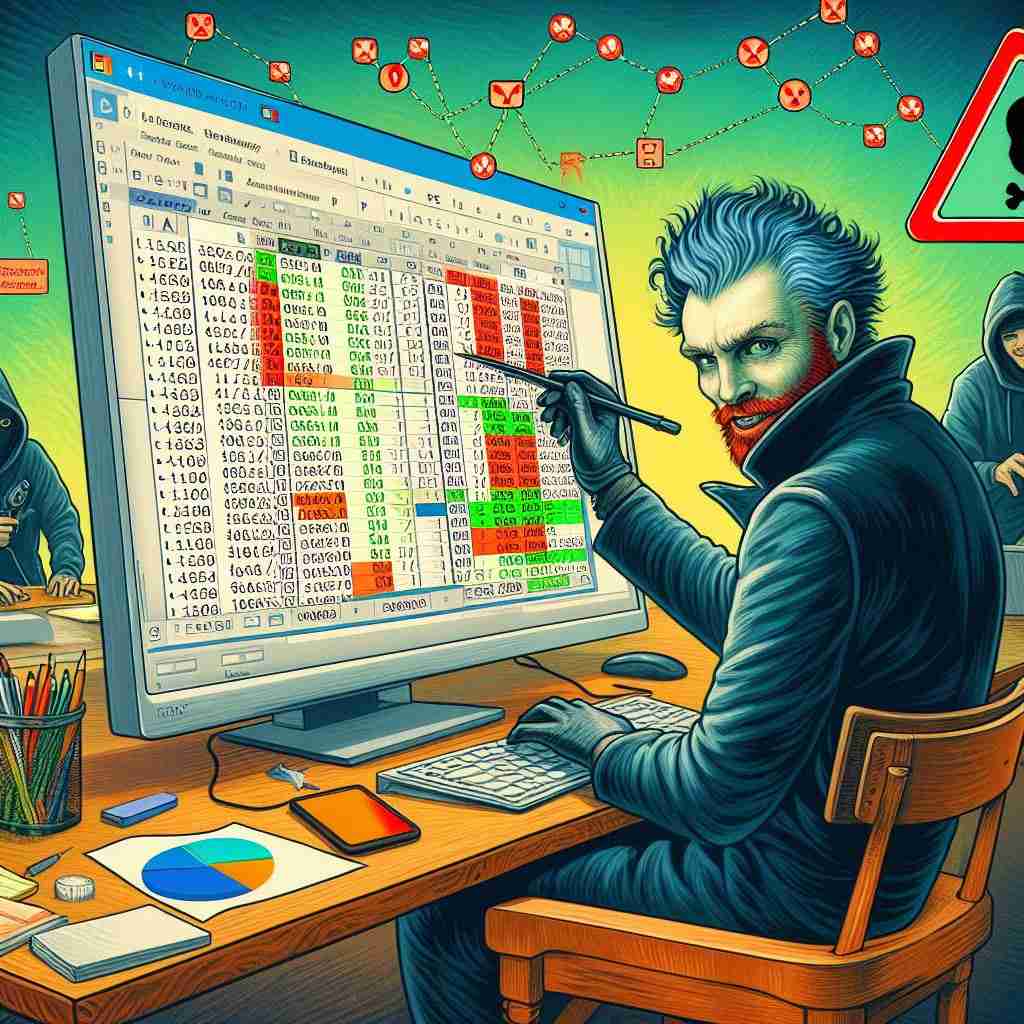
In the ever-evolving landscape of cybersecurity, we’ve come to realize that vulnerability can spring from the most unexpected places—a single poisoned pixel, for instance. Imagine a trusted security platform, designed to shield you from dangers lurking online, only to be compromised by a minuscule element, hidden amidst data bytes and pixels. It’s the digital age’s equivalent of a Trojan horse, a tiny flaw with the potential to blind an entire defense system.
Picture this: an unassuming image on a website, something as innocent as a loved one’s smile or a breathtaking sunset. Unbeknownst to the user, this image carries with it malicious intent, embedded in a single pixel that alters the way the software interprets reality. In the blink of an eye, what was once a guardian of your sensitive information becomes a doorway for cybercriminals. It’s a stark reminder that even the most robust defenses can be undermined by the smallest of details.
Let’s take a moment to reflect on the human aspect. Consider a small business owner pouring their heart and soul into their work—their payroll, customer data, and future plans resting in the hands of a system they trust. The day the poisoned pixel strikes is not just a technical failure; it’s a devastating blow to their dreams and livelihood. The emotional weight of such a breach is profound, eroding trust not just in technology but in the very framework of safety we’ve come to rely on.
Rationally, it sparks questions that demand urgent attention: How can we fortify our defenses against such minute yet mighty threats? This vulnerability drives us to innovate, to rethink how we approach cybersecurity. Drawing from the collective wisdom of industry experts and personal accounts of frontline defenders helps build a more resilient fortress against these insidious attacks.
Ethically, it’s vital for cybersecurity professionals to communicate the implications of their technology. Transparency fosters trust, encouraging users to understand the intricate dance of data. The fight isn’t just technical; it’s a deeply human battle, one where our safety hinges on our ability to connect, educate, and fortify one another against threats.
In a world where a single pixel can wreak havoc, we must shift our perspective. Each pixel represents not just data but trust. By bolstering our collective defenses, we can ensure that what makes us vulnerable can also make us stronger. The challenge is daunting, but together, we can transform fear into action, securing a safer future for all.

How a Single Poisoned Pixel Can Blind an Entire AI Security Platform
How a Single Poisoned Pixel Can Blind an Entire AI Security Platform
- Cybersecurity vulnerabilities can arise from unexpected sources, such as a poisoned pixel.
- A seemingly innocent image can harbor malicious intent, compromising trusted security platforms.
- The impact of such breaches extends beyond technical failures, affecting individuals’ livelihoods and emotional trust.
- This vulnerability necessitates innovation and a rethinking of cybersecurity strategies.
- Collaboration among industry experts and personal experiences is essential for building robust defenses.
- Cybersecurity professionals should prioritize transparency to build user trust and understanding.
- Collective efforts are needed to transform vulnerabilities into stronger defenses for a safer future.

How a Single Poisoned Pixel Can Blind an Entire AI Security Platform
Table Of Contents
- How a Single Poisoned Pixel Can Blind an Entire AI Security Platform
- What Happens When One Pixel Jeopardizes Our Security?
- How Can a Tiny Flaw Render an AI Blind?
- Are We Risking Everything for a Single Data Error?
- What Ethical Implications Arise From Pixel Vulnerability?
- How Do We Trust AI When One Mistake Can Have Massive Consequences?
- Which Safeguards Can Protect Us Against This Pixel Threat?
- How Can Narratives Shape Our Understanding Of AI Risks?
- Conclusion
- Other Resources
- Glossary Of Terms
- Other Questions
- Haiku
- Poem
- Checklist
What Happens When One Pixel Jeopardizes Our Security?
In the digital expanse of our lives, each pixel—oh, that innocuous speck on your screen—represents something far more significant than we often acknowledge. It’s a gateway, a portal, that connects us to a world where information flows like water, and where a single errant pixel can open floodgates to chaos. Imagine scrolling through a seemingly harmless ad; your eye flits past a pixel that’s cleverly disguised as a promotional banner. You click, and just like that, the boundaries of your personal security begin to erode. This isn’t just about ones and zeros; it’s about trust, privacy, and the vulnerabilities inherent in our connected existence.
Take a moment to reflect on your own life. When was the last time you felt truly secure in your digital interactions? Perhaps it was when your bank sent a message confirming, with reassuring authority, that your account was safe. Yet, one pixel can change that narrative. My friend, a diligent accountant, once found herself facing a storm when a pixel led her to a phishing website. In an instant, her financial security was compromised, and her life spiraled into a campaign of identity theft that took years to unravel. This isn’t just a story; it’s a very real scenario, echoing the struggles many face in today’s cyber landscape. Each story serves as a wake-up call, urging us to acknowledge the dangers lurking in what seems trivial.
We have an ethical obligation to safeguard not only our interests but also our communities. Every click can potentially affect someone beyond ourselves; we are all interconnected in ways that are often invisible. When we ignore the risks associated with a single pixel, we risk not only our data but also the fabric of our societal trust. It’s about building connections, fostering confidence, and understanding our shared responsibility in the digital sphere.
This isn’t a call to arms filled with foreboding statistics or the latest cybersecurity jargon. No, this is a call to embrace awareness and proactivity. Think of cybersecurity as you would a smoke detector: an unobtrusive watchman in your home, there to protect you from the unpredictable. Start asking the right questions every time you’re online. Would you let a stranger in your home just because they seemed friendly? No pixel should jeopardize your safety; approach every digital interaction with the same caution you’d use in the real world. Recognize that behind every seemingly harmless pixel is a potential threat, and stay vigilant. By doing so, we can fortify our defenses, not just for ourselves but for everyone.

What Happens When One Pixel Jeopardizes Our Security?
What Happens When One Pixel Jeopardizes Our Security?
- Each pixel on a screen symbolizes a significant connection to the digital world, impacting privacy and security.
- A careless click can lead to chaos, as illustrated by a personal story of phishing and identity theft.
- Real digital security is about trust and the vulnerabilities in our connected lives.
- Every online interaction has ethical implications that extend beyond the individual to the community.
- Awareness and proactivity in cybersecurity are essential for personal and societal safety.
- Cybersecurity should be approached with the same caution as inviting strangers into your home.
- Vigilance is crucial, as potential threats are often disguised in seemingly harmless elements online.

What Happens When One Pixel Jeopardizes Our Security?
How Can a Tiny Flaw Render an AI Blind?
In a world increasingly dominated by artificial intelligence, it’s easy to overlook how the tiniest flaw can disable these sophisticated systems, rendering them nearly blind. Imagine driving down a familiar road when suddenly, a tiny pothole appears. It’s easy to dismiss—just a simple bump, right? But in the moment of hit, you realize that every little imperfection can lead to a cascade of unforeseen consequences. That’s how minor flaws in AI systems work; they may look innocuous, but when it comes to cybersecurity, their implications can be profound.
Take, for instance, the case of a self-driving car. One miscalculated input, perhaps an unseen street sign due to a sensor malfunction, and the vehicle may fail to recognize a critical traffic change. What should have been a smooth journey can spiral into chaos, putting lives at risk. This isn’t science fiction; it’s a reality that many engineers are grappling with daily. The ethical burden is heavy: how do we ensure that our creations—those we entrust with our safety—are foolproof?
Now, consider this: just like a trusted family recipe, every component of an AI model must be meticulously accounted for. If an ingredient is off, it could ruin the whole dish. When we discuss cybersecurity, we often focus on shields and barriers, but we can’t forget the nuances—the little flaws in algorithms or data biases. These are like hidden grease spots on a beautifully prepared meal; they may not be visible, but they can change everything once you take a bite.
Even beyond technology, let’s connect this to our own lives. Have you ever tried to ignore a small problem, hoping it would resolve itself? Maybe it was a leaky faucet or a tense disagreement with a friend. When left unattended, those minor issues can escalate into bigger headaches. Similarly, in the realm of AI and cybersecurity, we must address the flaws before they culminate into catastrophic failures.
Lastly, think of the trust we place in these technologies. We want to believe that AI will serve and protect us, but that trust comes with an ethical obligation to ensure their integrity. We’re at a crossroads where ingenuity meets accountability. As artificial intelligence continues to grow, it invites us all to step up—not just as technology enthusiasts or cybersecurity experts but as conscientious stewards of innovation, nurturing systems that are resilient, reliable, and fundamentally robust.

How Can a Tiny Flaw Render an AI Blind?
How Can a Tiny Flaw Render an AI Blind?
- Minor flaws in AI systems can have significant cybersecurity implications.
- A small error, like a sensor malfunction in self-driving cars, can lead to dangerous situations.
- There is a heavy ethical burden on engineers to ensure AI systems are foolproof.
- Every component of an AI model must be precisely accounted for, similar to a family recipe.
- Neglecting small problems in life can lead to larger issues, paralleling flaws in AI.
- Trust in AI technologies comes with an ethical responsibility for their integrity.
- As AI progresses, we must act as accountable stewards to foster reliable innovative systems.

How Can a Tiny Flaw Render an AI Blind?
Are We Risking Everything for a Single Data Error?
In a world where data reigns supreme, every keystroke contributes to a vast tapestry of information, yet a single thread can unravel it all. Imagine a family sitting down to dinner, unaware that one careless click could expose their most intimate details to hackers lurking in the digital shadows. This isn’t just a tech problem; it’s a human one, where the consequences of a seemingly minor data error ripple through lives, altering trust and safety in ways we cannot fathom.
Cybersecurity isn’t just a buzzword; it’s the modern fortress protecting our lives. The emotional toll of a data breach extends far beyond credit scores and social security numbers. It hits home in the form of sleepless nights and burned-out relationships as worried parents spend hours worrying about the implications of a single lapse. It’s as if we’re all living in a silent movie, where one misplaced frame can alter the entire storyline. Those faced with real-world data breaches recount tales of anxiety, feeling raw and vulnerable as they navigate the repercussions of lost privacy.
Rationally, consider the financial implications. According to estimates, the average cost of a data breach can reach into the millions, not just in terms of fines but lost revenue and damaged reputations. Businesses, schools, and even non-profits find themselves shackled by preventable errors that sow distrust among their clients and communities. The ask is simple: safeguard the data as if it were our most beloved possession—because in many ways, it is.
Ethically, we have a duty to protect the information that belongs to others. Just as we wouldn’t leave our front doors wide open, we must ensure that cybersecurity stands watch over our digital thresholds. The authority figures in cybersecurity, from experts to government agencies, continuously remind us: one slip can lead to an avalanche of consequences that could shatter lives, careers, and identities.
Picture this: our collective digital future is like a community garden, requiring cooperation and vigilance to thrive. Each person, each organization holds a seed of responsibility. If we water this garden with care and attention to detail, we cultivate trust. But, neglecting it, just as with data, leaves us vulnerable to the harsh weeds of chaos and breach.
The stakes are high, and the choices we make ripple outward. By recognizing that one data error can cost us dearly, we empower ourselves to act, fostering connection and accountability within our communities. Cybersecurity isn’t just a technical issue; it’s a testament to our collective integrity and the trust we owe to one another. In this digital age, let’s not just protect our data; let’s preserve our humanity.

Are We Risking Everything for a Single Data Error?
Are We Risking Everything for a Single Data Error?
- Data is critical; a single error can have far-reaching consequences.
- A family’s privacy can be compromised by careless online behavior.
- Cybersecurity protects people emotionally and financially, impacting trust and well-being.
- Data breaches can cost millions, affecting businesses and organizations significantly.
- We have an ethical obligation to safeguard others’ data as if it were our own.
- Collaboration and vigilance are essential for a secure digital future.
- Cybersecurity reflects our collective integrity and the trust we must maintain in society.

Are We Risking Everything for a Single Data Error?
What Ethical Implications Arise From Pixel Vulnerability?
In a world dominated by technology, where a digital footprint can shape everything from our job prospects to our relationships, the term “pixel vulnerability” takes on a heavy weight. Imagine you’re a homeowner, proud of your meticulously arranged garden. One day, you discover that a tiny crack in your fence has allowed strangers to wander through uninvited. This is the essence of pixel vulnerability—tiny, seemingly insignificant flaws in our digital defenses that expose us to unwarranted risks. It’s both an emotional and ethical quandary.
Cybersecurity isn’t just about firewalls and encryption; it’s about safeguarding the very fabric of our lives. When hackers exploit pixel vulnerabilities, they aren’t just targeting systems; they’re violating our personal sanctuaries, often laying bare our most intimate moments. This breach can feel like a violation of trust, akin to having someone rummage through the drawers of your life. Each pixel can hold secrets—photos, messages, financial data—and when they are vulnerable, so are we.
Consider the tale of a young woman who had her identity stolen due to a compromised photo-sharing app. The breach not only disrupted her finances but also shook her sense of self. She felt like a ghost in her own life, haunted by the echoes of stolen experiences. This is more than a simple cybersecurity issue; it is a profound ethical crisis, one where we must grapple with the implications of our reliance on technology to curate and protect our lives.
Here’s where the gut kicks in. It’s not just the exposed data; it’s the mindset we adopt. Trust in our devices, in the companies that develop them, begins to erode. We have a collective responsibility to demand better cybersecurity measures, because every pixel we share is not just a piece of our story—it is a piece of who we are.
On a societal level, pixel vulnerability presents a daunting challenge. It forces us to examine the systems in place that govern our digital world. Do we truly know the repercussions of our choice to share? Are companies held accountable for breaches? Every time we hit ‘send,’ we invite a possibility that we might regret. It’s high time we advocate for a culture of transparency and respect surrounding our digital identities.
Engaging with the implications of pixel vulnerability isn’t merely an intellectual exercise; it’s a clarion call for action. By fostering a dialogue on ethical standards in cybersecurity, we can inspire change and build a future where our personal pixels are safeguarded. We owe it to ourselves and to each other, because our stories deserve protection.

What Ethical Implications Arise From Pixel Vulnerability?
What Ethical Implications Arise From Pixel Vulnerability?
- Pixel vulnerability refers to small flaws in digital defenses that expose individuals to risks.
- Cybersecurity extends beyond technical measures; it protects personal sanctuaries and intimate moments.
- Example of identity theft illustrates the emotional and ethical implications of compromised digital privacy.
- Trust in technology and companies erodes when data vulnerabilities are exploited.
- Society must examine accountability for digital sharing and ensure responsible practices.
- Advocacy for transparency and respect in digital identity management is essential.
- Engaging in discussions on ethical cybersecurity standards can lead to meaningful change.

What Ethical Implications Arise From Pixel Vulnerability?
How Do We Trust AI When One Mistake Can Have Massive Consequences?
Trusting AI, particularly when the stakes are so high, can feel like stepping into a rickety bridge—one that sways with every decision made. Cybersecurity isn’t just a buzzword; it’s part of our daily lives, undergirding our digital existence, from online banking to personal communications. When we turn over critical decisions to machines, we’re not just handing over data; we’re placing our faith in their algorithms, many of which we don’t fully understand.
Consider the individual who loses their identity through a data breach. Their life turns chaotic, filled with anxiety and frustration. It’s a stark reminder that AI’s impact can be incredibly personal. But it’s essential to ask, how do we navigate this landscape? The answer lies in embracing transparency. Imagine a scenario where AI systems freely share their decision-making processes, akin to showing the blueprint of that rickety bridge. When we can visualize how AI acts and reacts, it cultivates a sense of shared responsibility. While we may think of AI as an authority, it’s up to us to be informed consumers.
Not every AI system is created equal. Many organizations tout their cybersecurity measures, yet are often cloaked in jargon. It can feel as if they’re speaking a foreign language rather than gaining our trust. We need to look for those willing to break down the details, creating a dialogue rather than a monologue. By understanding their capabilities, we can shift from skepticism to informed trust.
We must also recognize the ethical dimensions at play. The narrative around AI often paints it as an infallible oracle, conjuring up visions of absolute accuracy—until it doesn’t. For instance, there are instances where misjudged AI outputs have led to grave outcomes, revealing that these systems, while powerful, are not without their flaws. Trying to find the balance between reliance and caution is the heart of this transition.
Finally, sharing personal stories—yours, mine, the stories of everyday people impacted by AI decisions—can forge connections. When we invite everyone to participate in the conversation about trust in AI, we cultivate a community of informed individuals ready to hold both technologists and ourselves accountable. Only then can we genuinely move towards a future where we embrace AI, fortified by the assurance that systems remain under human stewardship, prioritizing safety and reliability above all else.

How Do We Trust AI When One Mistake Can Have Massive Consequences?
How Do We Trust AI When One Mistake Can Have Massive Consequences?
- Trusting AI can feel risky, similar to stepping onto an unstable bridge.
- Cybersecurity is essential in everyday life, affecting activities from online banking to personal communication.
- Handing over critical decisions to AI involves placing faith in algorithms that may be poorly understood.
- Transparency in AI decision-making processes fosters shared responsibility among users.
- Not all AI systems are equally trustworthy; organizations should communicate clearly about their cybersecurity measures.
- AI is not infallible; misjudged outputs can lead to serious consequences, necessitating a balanced reliance on its capabilities.
- Sharing personal experiences regarding AI’s impact builds a community ready to hold technologists accountable and promotes informed trust.

How Do We Trust AI When One Mistake Can Have Massive Consequences?
Which Safeguards Can Protect Us Against This Pixel Threat?
In a world where our lives are becoming increasingly digitized, safeguarding our digital footprint is no longer just a technical concern—it’s an essential part of our daily lives. Cybersecurity must be woven into the fabric of our smart habits. Imagine for a moment your home with its front door wide open, inviting anyone to walk in unannounced. That’s what neglecting cybersecurity does to your digital life: it leaves you exposed.
To tackle the pixel threat—those insidious vulnerabilities that lurk behind the screens—we need to adopt a multi-faceted approach, much like the way we manage the risks of living in a neighborhood with a reputation. Just as you wouldn’t ignore a broken lock on your door, you can’t turn a blind eye to software updates or security features. Every update is like reinforcing that door—an act of care that tells cybercriminals, “Not here.”
One safeguarding tactic is the use of strong, unique passwords for every account, akin to having multiple keys for different locks. Drawing from my own experience, I once learned the hard way that using the same password across platforms can lead to disaster. It’s like handing over the key to your house just because the neighbor asked—seemingly innocuous but fraught with danger. A password manager becomes your trusted locksmith, keeping those keys secure and close at hand.
Beyond individual practices, the community plays a vital role in cybersecurity. When we band together, sharing knowledge and experiences, we create an environment where vulnerabilities can be identified and addressed collectively. Think of it like a neighborhood watch. We leverage our combined insights to spot that one unfamiliar face—or in this case, the potential threats navigating through our networks. Engagement in forums or local groups is akin to gathering around a campfire, sharing stories, and learning from one another.
Another key element that requires our serious attention is the ethical consideration behind our digital consumption. Companies that prioritize cybersecurity aren’t just protecting their profits; they’re safeguarding our identities and peace of mind. We should advocate for businesses that take a stand on cybersecurity. When we support them, we also spur an industry-wide change, pushing others to raise their standards.
Vigilance and action—these are our greatest allies. Staying informed, sharing knowledge, and taking responsibility for our own cybersecurity can build a resilient foundation against the pixel threat. Each step we take builds the digital walls of a fortress that not only protects us but also strengthens the entire community.

Which Safeguards Can Protect Us Against This Pixel Threat?
Which Safeguards Can Protect Us Against This Pixel Threat?
- Safeguarding our digital footprint is crucial in a digitized world, making cybersecurity a daily necessity.
- A multi-faceted approach is needed to address vulnerabilities, similar to managing risks in a neighborhood.
- Using strong, unique passwords for every account is essential, akin to having multiple keys for different locks.
- A password manager acts as a secure solution for managing these passwords.
- The community plays a significant role in cybersecurity through sharing knowledge and experiences.
- Support ethical companies that prioritize cybersecurity to encourage industry-wide standards.
- Vigilance, knowledge-sharing, and personal responsibility are key to building a resilient cybersecurity foundation.

Which Safeguards Can Protect Us Against This Pixel Threat?
How Can Narratives Shape Our Understanding Of AI Risks?
In a world increasingly shaped by technology, where bits and bytes govern much of our existence, the stories we tell about artificial intelligence (AI) can either illuminate the path ahead or cast shadows filled with uncertainty. Take, for instance, the tale of a small-town mechanic facing the dilemma of adopting advanced diagnostic tools. Initially, he felt the pull of anxiety—would these machines replace him? But through a narrative of empowerment, he realized that these tools could enhance his skills, allowing him to work smarter, not harder. This mechanic’s journey reflects a broader narrative about AI; it’s not just about the technology itself but how we choose to respond.
At the heart of understanding AI risks is recognizing that technology is not intrinsically good or bad; it’s the stories we weave around it that shape our interpretation. These narratives can evoke emotions—fear, hope, excitement—while driving home the reality that cybersecurity is not merely a technical issue; it’s a matter of ethics and human connection. Imagine a parent worried about their child’s safety online, envisioning cyber threats lurking behind every click. These fears are valid, but they can spur action, leading families to take proactive measures to secure their digital lives. By engaging narratives, we create bonds. We relate to one another’s fears and hopes, fostering a collective understanding of the complexities surrounding AI.
Ethically, we find ourselves at a crossroads when discussing AI. Will we allow profit-driven motives to dictate the future of technology, or will we advocate for responsible innovation? Effective narratives can empower individuals to voice their concerns, shaping policies that prioritize safety and security, ensuring that AI serves humanity’s best interests. When we share our stories—be they successes, failures, or moments of introspection—we provide a roadmap for others. This communal sharing fosters trust in the mechanisms meant to protect us.
Moreover, when discussing potential risks, we can analogize AI to a powerful vehicle. Without proper training and respect for its capabilities, it can veer off course, causing harm. Yet, the vehicle doesn’t drive itself; we do. Narratives about responsible use of AI and the importance of education in cybersecurity serve as the GPS guiding us. By embracing these stories, we transform fear into informed action, urging us to engage with technology thoughtfully.
The risk isn’t just about what AI can do; it’s about the narratives we create that shape our actions and inform our ethical compass. Through understanding and sharing these narratives, we empower ourselves and each other to navigate the challenges that lie ahead, ensuring a future where technology enhances our lives without compromising our safety.

How Can Narratives Shape Our Understanding Of AI Risks?
How Can Narratives Shape Our Understanding Of AI Risks?
- The narrative surrounding AI can illuminate paths or create uncertainty in society.
- A small-town mechanic’s journey illustrates the potential of technology to enhance skills rather than replace individuals.
- Understanding AI risks involves recognizing that technology is neither inherently good nor bad; it’s shaped by our narratives.
- The emotions evoked by these narratives influence actions regarding cybersecurity and ethics.
- Effective storytelling can empower individuals to advocate for responsible innovation and shape policies for safety.
- Analogies to powerful vehicles emphasize the need for proper education and respect in using AI technology.
- Sharing stories helps build trust and navigate the complexities of AI, ensuring it benefits humanity without compromising safety.

How Can Narratives Shape Our Understanding Of AI Risks?
Conclusion
In the digital arena, the threat of a single poisoned pixel jeopardizing the very security we trust isn’t just a statistic; it’s a story that resonates deeply with each of us. Picture this: you’re scrolling through images, perhaps a cherished family photo, oblivious to that minuscule element hiding malicious intent. At that moment, you’re not just seeing an image; you’re entrusting your safety and privacy to an omnipresent digital landscape—a world vulnerable to the smallest of flaws. It’s terrifying to think that the very fabric of our security can unravel from a single imperfection.
Let’s reflect on a more personal level. Many of us have poured our hearts into creating something meaningful—be it a business, a family, or even our personal data. We place our trust in technology to safeguard these vulnerabilities. And then, a seemingly innocuous pixel becomes a gateway for cybercriminals, turning what should be a protective layer into a gaping hole. This is more than a technical issue; it’s a human experience, one that can lead to sleepless nights filled with anxiety over compromised identities and lost futures. It’s not just about protecting data; it’s about preserving the dreams and realities that those data represent.
As we rise to meet these challenges, we must recognize our collective responsibility. Just as a small community comes together to watch over each other’s homes, we must unite to fortify our digital forts. Collaboration is crucial; sharing knowledge and experiences forms a safety net against the relentless barrage of threats. This isn’t merely about individuals protecting their own interests but about fostering a resilient community where trust and transparency reign supreme. Each of us has a pixel to protect, a piece of trust that we must nurture and defend together.
Navigating this digital landscape requires both an awareness of the unseen dangers and a commitment to proactive measures. Demand transparency from the technologies we utilize and the companies behind them. Educate one another; share the stories of those who have experienced breaches and those who have engaged in successful defenses. By embracing these communal narratives, we transform fear into empowerment. Cybersecurity isn’t just the job of IT professionals; it’s a shared endeavor beautifully woven with human connection and ethical obligation.
Ultimately, the challenge posed by a poisoned pixel is not insurmountable. By recognizing the magnitude of seemingly minor vulnerabilities and standing vigilant together, we can repurpose fear into action, cultivating a future where trust prevails, safety is paramount, and every pixel—every moment—matters.

Conclusion
Conclusion:
- A single poisoned pixel poses a serious threat to digital security, impacting personal safety and privacy.
- Individuals often unknowingly trust technology to protect their meaningful creations, such as businesses and personal data.
- A seemingly harmless pixel can become a gateway for cybercriminals, exposing vulnerabilities.
- This issue goes beyond technical concerns; it affects human experiences and can lead to anxiety over identity theft.
- Collective responsibility is essential; communities must unite to strengthen their digital security.
- Transparency and education are critical in combating cyber threats and empowering individuals.
- By recognizing vulnerabilities and collaborating, we can transform fear into proactive action for a safer digital future.

Conclusion
Other Resources

Other Resources
Here is a list of other resources you can review online to learn more:
- Scoop.It
- CalTech
- Medium
- Ascent InfoSec
- Tech Lock
- RedLegg
- ControlScan, Inc.
- Techcess CyberSecurity Group
- Cisco Systems
- Network Computer Solutions
- Xact IT Solutions
- Datapath
- CyberMaxx
- Atos
- Impact Networking
- Blue Line Technologies
- SecuAvail
- ADT Cybersecurity
- Booz Allen Hamilton
Use This Prompt To Get More Resources With Your Favorite Online AI Tool: Please provide me with a list of online articles with their URLs in a bulleted list that I can read regarding How a Single Poisoned Pixel Can Blind an Entire AI Security Platform

Other Resources
Glossary Terms
How a Single Poisoned Pixel Can Blind an Entire AI Security Platform – Glossary Of Terms
1. AI Security Platform: A software framework designed to protect systems from cyber threats using artificial intelligence technologies.
2. Poisoned Pixel: A manipulated or corrupted data point designed to mislead or impair an AI model’s performance.
3. Cyber Threat: Any malicious activity aimed at compromising the integrity, confidentiality, or availability of computer systems and data.
4. Machine Learning: A subset of AI that involves training algorithms to learn from data and make decisions based on that data.
5. Adversarial Attack: A strategy where attackers intentionally introduce subtle perturbations into data to deceive AI models.
6. Data Integrity: The accuracy and consistency of data throughout its lifecycle.
7. Model Training: The process of providing a machine learning model with data so that it can learn to make predictions or decisions.
8. Image Classification: The task of identifying and assigning labels to objects within an image using AI techniques.
9. Neural Network: A computational model inspired by the human brain that processes information in layers to recognize patterns and make predictions.
10. Input Data: The information fed into an AI model for processing and decision-making.
11. Decision Boundary: A hypersurface that separates different classes in a dataset, determined by an AI model during training.
12. Noise Injection: The introduction of random variations into data to make models more robust against adversarial attacks.
13. Data Augmentation: Techniques used to increase the diversity of training datasets by applying transformations like rotation or scaling.
14. Vulnerability: A weakness in a system that can be exploited by attackers to gain unauthorized access or cause damage.
15. False Positive: An error where the AI incorrectly identifies a benign input as a threat.
16. False Negative: An error where the AI fails to identify a real threat, allowing it to go undetected.
17. Robustness: The ability of an AI model to maintain performance despite changes in input data or conditions.
18. Algorithm: A set of rules or steps used for calculations and data processing, especially in computer programming.
19. Input Distribution: The statistical characteristics of the data fed into an AI model, crucial for accurate predictions.
20. Regularization: Techniques used to prevent an AI model from overfitting its training data, ensuring it generalizes well.
21. Defensive Mechanisms: Strategies and tools used to protect AI systems from adversarial attacks and other cyber threats.
22. Training Set: The portion of data used to train an AI model, which helps it learn patterns and make predictions.
23. Evaluation Metrics: Quantitative measures used to assess the performance and effectiveness of an AI model.
24. Overfitting: A modeling error that occurs when a machine learning model learns the training data too well, failing to generalize to new data.
25. Gradient Descent: An optimization algorithm used in training AI models by minimizing the error in predictions.
26. Binary Classification: A type of machine learning task where the goal is to categorize inputs into one of two distinct classes.
27. Feature Extraction: The process of transforming raw data into a set of measurable characteristics to improve model performance.
28. Transfer Learning: A method where a pre-trained model is adapted to a new, but related, task, reducing the need for extensive training data.
29. Robustness Testing: Evaluating an AI system’s defenses against various attack vectors to measure its reliability and security.
30. Threat Landscape: The current environment of potential threats faced by AI systems, encompassing known vulnerabilities and emerging attack strategies.

Glossary Of Terms
Other Questions
How a Single Poisoned Pixel Can Blind an Entire AI Security Platform – Other Questions
If you wish to explore and discover more, consider looking for answers to these questions:
- What exactly is a “poisoned pixel” and how does it differ from other adversarial inputs?
- Which types of AI models and security platforms are most vulnerable to pixel-based attacks?
- How is a poisoned pixel created and embedded into an image or media file?
- How common are real-world attacks that use single-pixel or small-pixel manipulations?
- Can a single poisoned pixel evade human notice while fooling AI systems?
- What attack vectors deliver poisoned pixels to target systems (ads, email, websites, shared images)?
- How do data poisoning and adversarial examples differ, and where does the poisoned pixel fit?
- What sensors and input modalities beyond images (video, LiDAR, audio) are susceptible to analogous micro-manipulations?
- How can developers detect the presence of poisoned pixels in incoming data streams?
- What preprocessing or sanitization techniques can neutralize poisoned pixels without degrading legitimate content?
- How effective are adversarial training and robust model architectures at defending against pixel attacks?
- Can content delivery networks, ad platforms, or image hosts inadvertently propagate poisoned pixels at scale?
- What logging and forensic capabilities are needed to investigate suspected pixel-based compromises?
- How should incident response teams respond to and remediate a compromise caused by a poisoned pixel?
- Who is legally and ethically liable when a third-party image or ad contains a poisoned pixel that causes a breach?
- What regulatory or industry standards address micro-manipulation threats to AI safety?
- How can organizations audit and harden their AI supply chain against injected or corrupted media?
- What are practical user-level actions (settings, tools, awareness) to reduce exposure to pixel attacks?
- How do pixel attacks interact with model explainability and interpretability techniques?
- What metrics and benchmarks exist to evaluate model robustness against single-pixel or sparse perturbations?
- Can encryption, digital signatures, or content authentication prevent the distribution of tampered images?
- How can detection systems distinguish between benign image noise and intentional malicious perturbations?
- Are there documented case studies of significant damage caused by single-pixel or micro-manipulation attacks?
- What are the cost and performance trade-offs of deploying defenses that filter or validate every visual input?
- How should organizations balance transparency about vulnerabilities with the risk of enabling attackers?
- What research gaps remain in understanding and mitigating pixel-level adversarial threats?
- How can narratives and public communication be designed to foster constructive action without causing unnecessary panic?
- What long-term architectural changes to AI systems would reduce the risk that tiny input flaws produce catastrophic outcomes?

Other Questions
Haiku
How a Single Poisoned Pixel Can Blind an Entire AI Security Platform – A Haiku
A pixel so small,
Hides chaos, breaches of trust,
Guard hearts, minds, and dreams.

Haiku
Poem
How a Single Poisoned Pixel Can Blind an Entire AI Security Platform – A Poem
In a world where pixels reign,
A single flaw, unseen, unchained,
Lurks in datas silent gasp,
A Trojan horse in every clasp.
Imagine trust, a cherished bond,
In your hands lies hope—beyond!
Yet one errant dot, a subtle blight,
Turns warmth to fear, day into night.
A small business, dreams aglow,
Entrusts its fate to the data flow.
When a pixel whispers, malice unseen,
Lives unravel, confidence gleaned.
Rational souls, we seek the key,
To guard against this treachery.
Experts rise, collective might,
Innovate, educate—ignite the fight.
With ethics at our core, we must demand,
Transparency, security—a guiding hand.
For every pixel holds a tale,
Of safety lost, of trust gone pale.
Communities unite, with stories shared,
In vigilance, our voices paired.
Cyber threats hold a mirror to us,
In our choices, stride to trust.
So care for your data as gold refined,
For justice flourishes when hearts align.
In this dance of light and shade,
Let’s cultivate trust, our digital trade.
Each pixel’s flaw, a chance we take,
But together, stronger—no room for quake.
From fear to action, let’s lead the charge,
To build a future, secure and large.
Poem
Checklist
How a Single Poisoned Pixel Can Blind an Entire AI Security Platform – A Checklist
Emotional Appeals
✅______ Reflect on personal experiences: How would a breach affect you or your loved ones?
✅______ Consider the human element: Protect not just data but also relationships and trust.
Rational Appeals
✅______ Understand the significance of cybersecurity: Can you identify vulnerabilities like pixel threats in your digital life?
✅______ Evaluate your current cybersecurity measures: Are they robust enough to prevent minor flaws from leading to significant issues?
Ethical Appeals
✅______ Advocate for transparency in technology: Are companies providing clear information about their security measures?
✅______ Recognize the collective responsibility to protect privacy: How can you contribute to a culture of cybersecurity in your community?
Authority Appeals
✅______ Consult industry experts: What best practices do they recommend for safeguarding your digital presence?
✅______ Follow updates from trusted cybersecurity organizations: Are you keeping informed about the latest threats and defenses?
Narrative Appeals
✅______ Share stories of those impacted by data breaches: How can these narratives inspire action and awareness within your community?
✅______ Use analogies to communicate risks: Can you relate the significance of pixel vulnerabilities to everyday experiences?
Social Appeals
✅______ Engage in community discussions about cybersecurity: Are you participating in workshops or forums to share knowledge?
✅______ Promote collaboration in protecting digital spaces: How can you support local initiatives focused on enhancing cybersecurity awareness?

Checklist
At BestCyberSecurityNews, we help teach entrepreneurs and solopreneurs the basics of cybersecurity and its impact on their businesses by using simple concepts to explain difficult challenges.
Please read and share any of the articles you find here on BestCyberSecurityNews with your friends, family, and business associates.


