Uniting Forces: How AI Empowers Safer Societies Through Collaboration
By Tom Seest
At BestCyberSecurityNews, we help teach entrepreneurs and solopreneurs the basics of cybersecurity and its impact on their businesses by using simple concepts to explain difficult challenges.
Please read and share any of the articles you find here on BestCyberSecurityNews with your friends, family, and business associates.
How AI Is Transforming Government Threat Intelligence Sharing
In the fast-paced world of cybersecurity, where threats lurk in every digital shadow, government agencies are learning to do something extraordinary: they’re transforming the way they share threat intelligence. Imagine a tightly-knit neighborhood where every household keeps a close eye on the other—if one sees something suspicious, they ring the bell and warn everyone. This instinct to look out for one another is now being mirrored in the realm of government. By leveraging the power of artificial intelligence, agencies can gather and analyze a vast array of data at lightning speed, allowing them to make informed decisions about threats that could impact us all.
Picture a small town where a storm is brewing. Instead of waiting for the clouds to gather, residents come together, sharing forecasts and warnings gleaned from experience and technology. This collaborative spirit is evolving within government cybersecurity. AI acts as that unifying force—an all-seeing eye, analyzing patterns from countless sources, from social media chatter to unusual network activities. It empowers agencies to share intelligence not just efficiently, but effectively, creating a tapestry of knowledge that benefits everyone.
However, this transformation isn’t merely about technology; it’s about people. Within agencies, professionals are fueled by a sense of duty, making sacrifices to protect our nation’s digital frontiers. They’re the unsung heroes, working tirelessly behind the scenes to neutralize threats before they wreak havoc. We connect with these individuals not just as employees of government bodies, but as our friends and neighbors. They become part of our community, standing guard at the gates of our digital world.
Ethically, this shift also invites a discussion about trust. The use of AI in sharing intelligence raises questions about surveillance and privacy. But, when implemented transparently, the potential for a safer society outweighs these concerns. Citizens must know that the information shared is done so respectfully and purposefully, aimed solely at protecting public interests.
The real magic happens when we foster a culture of collaboration across state lines, agencies, and even nations. If governments across the globe can pool their insights through AI-driven platforms, they become a formidable united front. We’re all playing a part in this enormous puzzle of cybersecurity, reminding us that each piece, no matter how small, contributes to the strength of the whole. So, as we navigate this brave new world, let’s carry that neighborhood spirit into our digital lives—because, together, we can turn the tide against even the most insidious of threats.

How AI Is Transforming Government Threat Intelligence Sharing
How AI Is Transforming Government Threat Intelligence Sharing
- Government agencies are transforming the sharing of threat intelligence in cybersecurity.
- Collaboration among agencies mirrors a community watch, enhancing situational awareness.
- Artificial intelligence enables rapid data gathering and analysis to identify threats.
- Professionals in agencies are dedicated to protecting digital frontiers, acting as unsung heroes.
- Ethical considerations around AI use include surveillance and privacy concerns.
- Transparent implementation of AI can foster trust and enhance public safety.
- A unified global approach to cybersecurity can strengthen defenses against threats.

How AI Is Transforming Government Threat Intelligence Sharing
Table Of Contents
- How AI Is Transforming Government Threat Intelligence Sharing
- How Can AI Enhance Collaboration In Threat Intelligence Sharing?
- What Ethical Concerns Arise From Using AI In Government Security?
- In What Ways Can AI Mitigate Misinformation In Intelligence Reports?
- How Can Trust In AI Systems Foster Better Inter-Agency Communication?
- How Is AI Addressing the Need for Real-Time Threat Updates?
- What Social Dynamics Influence the Adoption Of AI In Government?
- How Can Transparency In AI Processes Improve Public Confidence?
- Conclusion
- Other Resources
- Glossary Of Terms
- Other Questions
- Haiku
- Poem
- Checklist
How Can AI Enhance Collaboration In Threat Intelligence Sharing?
In today’s fast-paced digital landscape, cybersecurity threats are not just abstract ideas; they’re very real hazards that can impact anyone. Imagine a small business owner in a quaint town—a hardworking individual pouring their heart into their shop, only for a malicious cyberattack to siphon away years of effort in mere moments. Now, picture the power of artificial intelligence (AI) stepping in—turning the tide from helplessness to strength in threat intelligence sharing.
AI serves as a steadfast ally, transcending the traditional barriers that often divide organizations. Through machine learning and data analysis, it identifies patterns in threat behavior quicker than any human can hope to achieve. When a cyber threat is detected in one corner of the world, AI shares that intelligence rapidly—like a trusted friend calling to warn you about an upcoming storm. This capability not only safeguards businesses but fosters a communal spirit of cooperation, creating a network where information flows freely.
Imagine a firefighter alerting neighbors about an imminent blaze. In the cybersecurity realm, AI acts in that very same way. It ensures small businesses, enterprises, and nonprofit organizations remain interconnected, sharing vital information to defend against malevolent actors. The emotional weight of knowing that a threat could impact your neighbor—whether that’s down the street or across the globe—ignites a sense of urgency and ethical responsibility. We aren’t just fighting for ourselves; we’re safeguarding our collective community.
Here’s where it gets truly interesting: AI’s role isn’t limited to mere detection and sharing; it nurtures a culture of vigilance and preparedness. Organizations can leverage AI to simulate real-world cyber-attack scenarios, honing their response strategies. It’s like a firefighter conducting drills—not just preparing for the unexpected but reinforcing the bonds that encourage teamwork in moments of crisis. This blend of practicality and emotional connection enhances trust among stakeholders, aligning their missions toward a common goal: ensuring safety and security.
The call to action here is simple yet profound. Embrace AI as an integral part of your cybersecurity strategy. When we harness the tools that technology provides, we transform fear into strength, turning isolated efforts into a united front. Collaboration through AI in threat intelligence sharing isn’t just smart; it’s the ethical path forward, building resilience not just for individuals, but for entire communities across the globe. Together, we can stand strong against any storm, protecting not just our assets but the very essence of our societies.

How Can AI Enhance Collaboration In Threat Intelligence Sharing?
How Can AI Enhance Collaboration In Threat Intelligence Sharing?
- Cybersecurity threats are significant and can affect anyone, including small businesses.
- Artificial intelligence (AI) enhances threat intelligence sharing, turning vulnerability into strength.
- AI identifies threat patterns more quickly than humans through machine learning and data analysis.
- Information about cyber threats is shared swiftly, promoting a culture of cooperation among organizations.
- AI nurtures vigilance by simulating cyber-attack scenarios, helping organizations prepare effectively.
- Embracing AI in cybersecurity creates a united front against threats, fostering community resilience.
- Collaboration through AI is not only intelligent but also an ethical imperative for societal safety.

How Can AI Enhance Collaboration In Threat Intelligence Sharing?
What Ethical Concerns Arise From Using AI In Government Security?
In a world awash with data, the infusion of AI into government security raises profound ethical questions that ripple through our society, touching on our core values. The allure of cybersecurity—the promise of fortified defenses and swift responses—can be tantalizing. However, this promise does not come without a cost. When we entrust our security to AI systems, we must confront the moral implications of allowing algorithms to decide who is a threat and who is not.
Imagine a small-town police chief, once a simple enforcer of the law, now faced with a tool that identifies potential criminals based on shaky algorithms shaped by biased data. This chief, filled with good intentions, is suddenly empowered to act on these predictions, yet the weight of that decision grows heavier. Those magic machines may miss the nuances of human behavior, reducing complex lives into binary classifications. The risk? Lives could be turned upside down with a single, flawed analysis.
Consider a scenario where a local artist’s online presence is flagged as suspicious by an AI system that misinterprets her work as a threat. In this instance, we witness the collision of technology with human reality. The artist, who merely seeks connection and expression, finds herself ensnared in a web of misunderstandings, leading to feelings of alienation and distrust. This isn’t just a statistical error; it’s a story of human impact that compounds the ethical quandaries of reliance on AI.
Moreover, the erosion of privacy looms large. In an age where surveillance seems to be the norm, the question arises: How much personal freedom are we willing to sacrifice for safety? Government agencies, empowered by advanced algorithms, may inadvertently normalize invasive practices under the guise of protection. This creates a tension—a tug-of-war between safety and autonomy, where citizens must navigate the murky waters of security theater versus genuine safety.
And while there’s comfort in having AI bolster our defenses against cyber threats, there’s equal peril in allowing machines to dictate our security landscape. This unsettling truth beckons us to tread thoughtfully. Trust in these systems requires vigilance—constant scrutiny over how they are designed, implemented, and regulated.
A new ethos must rise from this conversation, one that emphasizes ethical transparency and accountability. We ought to consider how we can forge a future where AI serves as a tool for societal good, not a weapon of fear. Let’s lean into the challenge and embrace a more human-centric approach, ensuring that technology augments our capacities without stripping away our humanity. In this journey, we must stand united, advocating for a cybersecurity landscape that protects, rather than alienates.

What Ethical Concerns Arise From Using AI In Government Security?
What Ethical Concerns Arise From Using AI In Government Security?
- The integration of AI in government security raises significant ethical concerns impacting societal values.
- Entrusting security decisions to AI systems risks reducing complex human behavior to simplistic classifications.
- A small-town police chief’s reliance on biased algorithms illustrates the pitfalls of AI in law enforcement.
- Misinterpretations by AI can lead to unjust consequences, as seen with an artist whose work is wrongly flagged as suspicious.
- The balance between safety and individual privacy is increasingly challenged by government surveillance practices.
- Trust in AI systems necessitates ongoing scrutiny regarding their design and application.
- Advocating for ethical transparency and a human-centric approach is crucial for a positive cybersecurity future.

What Ethical Concerns Arise From Using AI In Government Security?
In What Ways Can AI Mitigate Misinformation In Intelligence Reports?
In an era where information spreads faster than wildfire, the stakes have never been higher. Intelligence reports—our guiding stars in turbulent times—often find themselves muddied by misinformation. This is where artificial intelligence, like a trusty compass, steps in to cut through the fog. Picture a firefighter, weary and covered in soot, dousing flames not just with water but with precision tactics; that’s AI in our battle against misinformation.
Imagine a world where a cybersecurity expert, equipped with AI-driven tools, can sift through mounds of data to identify rumors before they spiral into chaos. By employing advanced algorithms, AI can analyze patterns and flag potential misinformation in real time, allowing analysts to focus on what truly matters. It’s as if we’ve designed a high-tech watchdog, tirelessly patrolling the information landscape, separating fact from fiction, and doing so with the efficiency of a well-oiled machine.
Think back to a moment in your own life when you acted on hearsay—be it a juicy rumor at work or a viral post on social media. How many times have you felt the twinge of embarrassment upon discovering the truth? We’ve all been there, and it speaks to our shared humanity. AI offers us not just the means to unearth facts but also a way to enrich that personal connection we crave. When we leverage AI in intelligence circles, it’s not just about the data; it’s about fostering trust. A well-informed public is a resilient public, equipped to face challenges with clarity.
Using narratives that resonate will only strengthen AI’s role in safeguarding our information integrity. For instance, consider a soldier in the field, relying on precise intel to navigate dangerous terrain. If that intel is compromised by misinformation, lives are at stake. AI can act as the first line of defense, ensuring that those critical reports are accurate, reliable, and verified.
Ethically speaking, the adoption of AI in cybersecurity also addresses accountability. We can hold systems and processes to a standard that builds public trust. With AI as an ally, we’re not just fighting against misinformation; we’re cultivating a culture of informed citizens who value truth and transparency.
By blending cutting-edge technology with the heart of our communities, AI does more than combat misinformation—it empowers us. When we harness its potential, we take collective ownership of our information ecosystem, making strides toward a future where accuracy prevails. Together, we can stand firm against the tide of misinformation and emerge stronger, united by the truth.

In What Ways Can AI Mitigate Misinformation In Intelligence Reports?
In What Ways Can AI Mitigate Misinformation In Intelligence Reports?
- Information spreads rapidly, increasing the risks of misinformation affecting intelligence reports.
- Artificial intelligence serves as a reliable tool to combat misinformation, acting like a compass to guide analysts.
- AI-driven tools enable cybersecurity experts to identify and analyze potential misinformation efficiently.
- A well-informed public, supported by AI, fosters trust and resilience in facing challenges.
- AI acts as a critical first line of defense, ensuring the accuracy and reliability of intelligence reports.
- The ethical use of AI in cybersecurity promotes accountability and public trust in information processes.
- By integrating AI with community efforts, we can enhance our information ecosystem and uphold truth and accuracy.

In What Ways Can AI Mitigate Misinformation In Intelligence Reports?
How Can Trust In AI Systems Foster Better Inter-Agency Communication?
In a world where the stakes are high and the margins for error are razor-thin, trust in AI isn’t just a technical necessity; it’s a lifeline that can bridge the gaps between agencies, fostering a collaboration that can lead to truly transformative outcomes. Think about the way we communicate—we rely on each other’s expertise, believing that what one agency knows can enhance another’s readiness. This isn’t just about efficiency; it’s about security. When agencies trust AI systems to manage and analyze vital data, they’re not just adopting a tool; they’re developing a partner in ensuring cybersecurity.
Consider a scenario where law enforcement and emergency services need to coordinate during a natural disaster. With AI driving real-time data analysis, agencies can share actionable insights that save lives. Imagine the comfort of a fire chief, confident that predictive analytics from an AI system will highlight the most vulnerable areas in real-time, guiding first responders effectively. This is where trust in AI takes root—not just as a code of algorithms but as a trusted ally in navigating chaos.
The heart of the matter lies in how we cultivate this trust. Trust is built on transparency, ensuring that everyone understands how AI systems arrive at their conclusions. This isn’t the realm of abstract charts and numbers; it’s about coming together over a shared goal. Let’s share a story: in a small town, fire and police departments began using a new AI tool. Initially apprehensive, they bonded over late-night strategy meetings, deciphering data that illuminated the patterns of local crime and fire risks. As they began to see results—community safety improved, response times cut—they shared their victories not just with each other but with the public, weaving accountability and trust into the very fabric of their collaboration.
Beyond technology, there’s an ethical imperative here. Agencies have a responsibility not just to protect their turf but to safeguard the communities they serve. When trust flourishes, so does a culture of collective responsibility. Each agency can rely on AI to enhance its capabilities without compromising the security of critical information. This isn’t mere cooperation; it’s a social contract, reinforcing the notion that we are stronger together.
The relationship we establish with AI systems can redefine how agencies communicate. It’s not simply about integrating technology—it’s about forging bonds that enhance trust, inspire action, and pave the way for a safer, more secure future. When we see AI as a partner rather than just a tool, we set the stage for collaboration that echoes through the very essence of public service.

How Can Trust In AI Systems Foster Better Inter-Agency Communication?
How Can Trust In AI Systems Foster Better Inter-Agency Communication?
- Trust in AI is essential for collaboration between agencies, enhancing transformative outcomes.
- Effective communication relies on leveraging each agency’s expertise for improved readiness and security.
- AI facilitates real-time data analysis during emergencies, providing actionable insights that can save lives.
- Building trust in AI involves transparency, making sure agencies understand its decision-making processes.
- Collaboration fosters accountability and enhances community safety, as demonstrated by a small town’s fire and police departments.
- Agencies have an ethical responsibility to protect communities, fostering a culture of collective responsibility through trust in AI.
- Viewing AI as a partner transforms communication and reinforces the essence of public service by enhancing safety and security.

How Can Trust In AI Systems Foster Better Inter-Agency Communication?
How Is AI Addressing the Need for Real-Time Threat Updates?
In a world fraught with digital dangers lurking in every corner, cybersecurity has become a lifeline we didn’t know we needed until it felt too late. Imagine you’re at a bustling intersection, where every car represents the vast network of data zipping through cyberspace. Each one carries a unique story, but only a fraction is safe. Enter AI, navigating the chaos with the diligence of a seasoned traffic cop, ensuring that the right information flows smoothly while blocking potential hazards before they can cause real trouble.
Artificial Intelligence is revolutionizing our approach to cybersecurity, acting as both a watchdog and a wise sage. Real-time threat updates crafted by AI serve as an early warning system, akin to a weather alert that prepares you for an impending storm. Just as a seasoned sailor learns to read the skies and seas, AI analyzes online patterns, distinguishing between the innocuous and the insidious with extraordinary precision. This isn’t mere automation; it’s about making sense of chaos, unearthing hidden threats, and anticipating attacks long before they emerge from the shadows.
Take the story of a small business owner, whose passion project turned into a digital nightmare when a cyber attack crippled operations overnight. Frustrated and defeated, she found solace in an AI-powered cybersecurity solution. It not only provided immediate updates about potential threats but empowered her with insights, allowing her to adapt and grow stronger in the face of adversity. In moments like these, AI transforms from a technical abstraction into a trusted ally, a companion on the treacherous pathway of the digital age.
This seamless blend of technology and humanity fosters a culture of trust among users. Citizens of the digital world are more engaged and informed, reducing the stigma of being “vulnerable.” When we talk about cybersecurity, we are really talking about the bigger picture—a collective responsibility that transcends individual interests. AI reminds us that staying safe online isn’t just about individual measures; it’s about building a community resilient against threats.
For all the hype surrounding AI, the real magic lies in its capacity to inspire action. When we have real-time threat updates handling the heavy lifting, we can focus on what matters most—living our lives with confidence and peace of mind. In this great digital tapestry we weave, AI ensures our threads remain strong, guiding us through uncertainty and towards a safer future.

How Is AI Addressing the Need for Real-Time Threat Updates?
How Is AI Addressing the Need for Real-Time Threat Updates?
- Cybersecurity is crucial in navigating digital dangers and protecting data.
- Artificial Intelligence (AI) acts as a proactive guardian, ensuring safe data flow and blocking threats.
- AI provides real-time threat updates, serving as an early warning system for users.
- It analyzes online patterns, distinguishing between benign and dangerous elements with precision.
- AI empowers users, like a small business owner, by providing insights to adapt and strengthen defenses.
- There is a collective responsibility in cybersecurity, emphasizing community resilience over individual measures.
- AI inspires action and allows individuals to focus on their lives with confidence and peace of mind.

How Is AI Addressing the Need for Real-Time Threat Updates?
What Social Dynamics Influence the Adoption Of AI In Government?
In the age of rapid technological advancement, it’s easy to forget that behind those sleek algorithms and predictive models lies a tapestry of human emotion, experience, and society. The adoption of artificial intelligence (AI) in government isn’t just a matter of clever programming; it’s a deeply human endeavor that’s affected by a series of social dynamics that can either propel us forward or hold us back.
Imagine a small town facing budget cuts, where every dollar seems to vanish into a black hole. When the government suggests using AI for resource management, it’s met with skepticism. Why? Because the town has lived through technological disappointments in the past, leaving trust shattered like glass. What breaks that barrier? It starts with transparency. Providing detailed explanations of what AI can do—including how it bolsters cybersecurity—is crucial in building confidence. People want to know that their data is safe in this brave new world. It’s about bringing the community along for the ride, showing them that AI can streamline processes, make informed decisions, and ultimately improve their lives.
Then, there’s the ethical dimension. Leaders must ask tough questions: Will AI reinforce biases or enhance fairness? Citizens are the ultimate judges of those ethical considerations, and if they sense that AI is merely an obligation rather than an opportunity, they will resist its implementation. By establishing ethical guidelines and engaging communities in dialogue about how AI can be used responsibly, governments can foster a sense of ownership and cooperation.
Narrative is also a vital tool. When leaders share success stories from other municipalities that embraced AI for community safety or public health, they tap into the emotional core. People respond to relatable experiences and aspire to be part of a success story themselves. Just like a farmer optimistically venturing into a new crop, communities want to feel they’re stepping into something positive, not just another tech gadget.
Additionally, establishing authority matters. When governments bring in experts who can translate complex AI concepts into everyday language, it creates a bridge—a link that demystifies technology and makes it approachable. Think of it like inviting a knowledgeable friend over to explain a complicated recipe; suddenly, the ingredients seem less intimidating.
Ultimately, the adoption of AI in government comes down to relational dynamics. It’s about trust, engagement, and collaboration. When citizens feel they’re part of the conversation, that they’re not just onlookers but active participants in the creation of their future, they become champions for change. It’s a profound reminder that while technology may hold the keys to innovation, the heart of adoption lies in the connections we build along the way.

What Social Dynamics Influence the Adoption Of AI In Government?
What Social Dynamics Influence the Adoption Of AI In Government?
- The integration of AI in government is influenced by social dynamics and human emotions.
- Transparency and detailed explanations of AI’s capabilities are essential for building public trust.
- Ethical considerations, such as bias and fairness, shape citizens’ acceptance of AI.
- Sharing success stories from other municipalities can engage communities and foster optimism.
- Experts can help demystify AI, making technology more approachable for the public.
- Engagement and collaboration between citizens and governments enhance the adoption of AI.
- Successful AI adoption relies on building relationships and trust within communities.

What Social Dynamics Influence the Adoption Of AI In Government?
How Can Transparency In AI Processes Improve Public Confidence?
In an age where technology drives much of our daily lives, the increasing integration of artificial intelligence (AI) into our world raises questions about trust and transparency. Picture this: you’re sitting in your car, and the engine light flickers ominously on the dashboard. You might feel a pang of anxiety. Is it serious? How much will it cost to fix? This instinctual response highlights a universal truth—when it comes to systems we rely on, a lack of clarity breeds suspicion, while transparency builds confidence.
Take cybersecurity—the backbone of our digital world. When AI is involved in protecting sensitive information, the stakes can feel astronomically high. Consider a scenario in which a well-known company experiences a data breach. The public clamors for answers: How did this happen? What part did AI play? Answering these questions with honesty demonstrates accountability. The more organizations communicate the processes and decision-making algorithms of their AI systems, the more people can understand the safeguards in place. It’s the difference between communicating a complex situation with jargon that leaves people in the dark, and using clear, relatable terms that build bridges of understanding.
This isn’t just about technical know-how; it’s about connecting with people on a human level. Sharing real stories can make these concepts tangible. Imagine a tech company unveiling an AI solution designed to help detect fraudulent transactions. If they take the time to explain not just the technology involved, but also the people behind it—their commitment to ethical practices and their ongoing efforts to improve security—the public’s trust deepens. It’s akin to inviting someone into your workshop; showing them the tools, the processes, the care taken at every step. The more transparent we are about what AI does, the less daunting it seems.
Moreover, when organizations champion transparency, it sends a ripple effect through the community. It fosters an environment where everyone feels they can voice concerns and contribute to conversations about AI ethics and cybersecurity. This collective engagement turns abstract algorithms into relatable narratives, reminding us that behind every line of code are people trying to create solutions that serve and protect.
Ultimately, transparency isn’t just a lofty ideal; it’s a necessary ingredient for building trust. It’s about turning curiosity into understanding, apprehension into action. By illuminating the inner workings of AI, we don’t just alleviate fears; we unlock the full potential of technology for all, establishing a path toward a future where confidence can thrive.

How Can Transparency In AI Processes Improve Public Confidence?
How Can Transparency In AI Processes Improve Public Confidence?
- The integration of artificial intelligence (AI) raises concerns about trust and transparency in technology.
- Lack of clarity in systems can lead to suspicion, while transparency fosters confidence.
- In cybersecurity, public trust hinges on transparent communication about AI’s role in protecting sensitive data.
- Clear, relatable explanations build understanding and accountability, particularly after data breaches.
- Sharing real stories about AI technologies and ethical practices enhances public trust.
- Championing transparency encourages community engagement in discussions about AI ethics and cybersecurity.
- Transparency transforms apprehension into understanding, unlocking AI’s potential and fostering a confident future.

How Can Transparency In AI Processes Improve Public Confidence?
Conclusion
Artificial intelligence is reshaping the landscape of government threat intelligence sharing, and it’s about more than just code and algorithms—it’s a testament to our collective human spirit. Think of a close-knit community: every neighbor looking out for one another, sharing warnings of impending storms and lurking dangers. This same ethos is now taking root in government agencies, where collaboration, spurred by AI, creates a larger network of vigilance. Just as a watchful neighbor calls out when spotting something amiss, AI sifts through vast amounts of data, alerting agencies to potential threats before they escalate.
Imagine you’re a small business owner, pouring your heart into your shop. One day, a cyberattack topples everything you’ve built. It’s a raw, gut-wrenching experience that strips away your peace. Now envision the power of AI coming to your aid, providing real-time updates that help you evade disasters. With proactive sharing, AI becomes your digital sentinel, not just an abstract tool, but a partner ready to defend your livelihood. This isn’t merely about technology; it’s about fostering relationships built on trust and collaboration among different agencies and communities.
However, with great power comes great responsibility. The introduction of AI into our security apparatus raises ethical questions: How do we strike the right balance between safety and privacy? While AI can enhance public safety, it’s crucial that we maintain transparency in its implementation to build trust. The process should be clear and open, engaging the public in discussions about how data is collected and used, turning abstract systems into relatable narratives. Only then can we truly embrace AI as a trusted ally rather than a specter looming over our freedoms.
As we stand at this crossroads, we have a choice—a chance to weave accountability and community spirit into the fabric of our digital defenses. By doing so, we not only address vulnerabilities but also strengthen the collective resolve that binds us as a society. In the end, it’s about ensuring that our safety nets are not just collections of algorithms, but enduring connections within our communities. Let’s carry that neighborhood spirit into our digital lives—because when we work together, we can take on any storm and safeguard not only our assets but the essence of what it means to live and thrive together. The path forward is clear: with collaboration and transparency, we can harness AI to not just achieve security, but build a thriving community that feels, quite simply, more secure.

Conclusion
Conclusion:
- Artificial intelligence is transforming government threat intelligence sharing beyond just technology, emphasizing human collaboration.
- The community ethos fosters vigilance as agencies collaborate through AI, similar to neighbors looking out for one another.
- AI sifts through vast data to alert agencies to potential threats, acting as a digital sentinel for businesses and citizens.
- Proactive sharing of AI information helps small business owners avoid disasters like cyberattacks, enhancing their security.
- The integration of AI raises ethical questions about balancing safety and privacy, necessitating transparency to build trust.
- Engaging the public in discussions about data use is crucial for turning abstract systems into relatable narratives.
- Collaboration and transparency in AI implementation can strengthen community ties and enhance overall security.

Conclusion
Other Resources
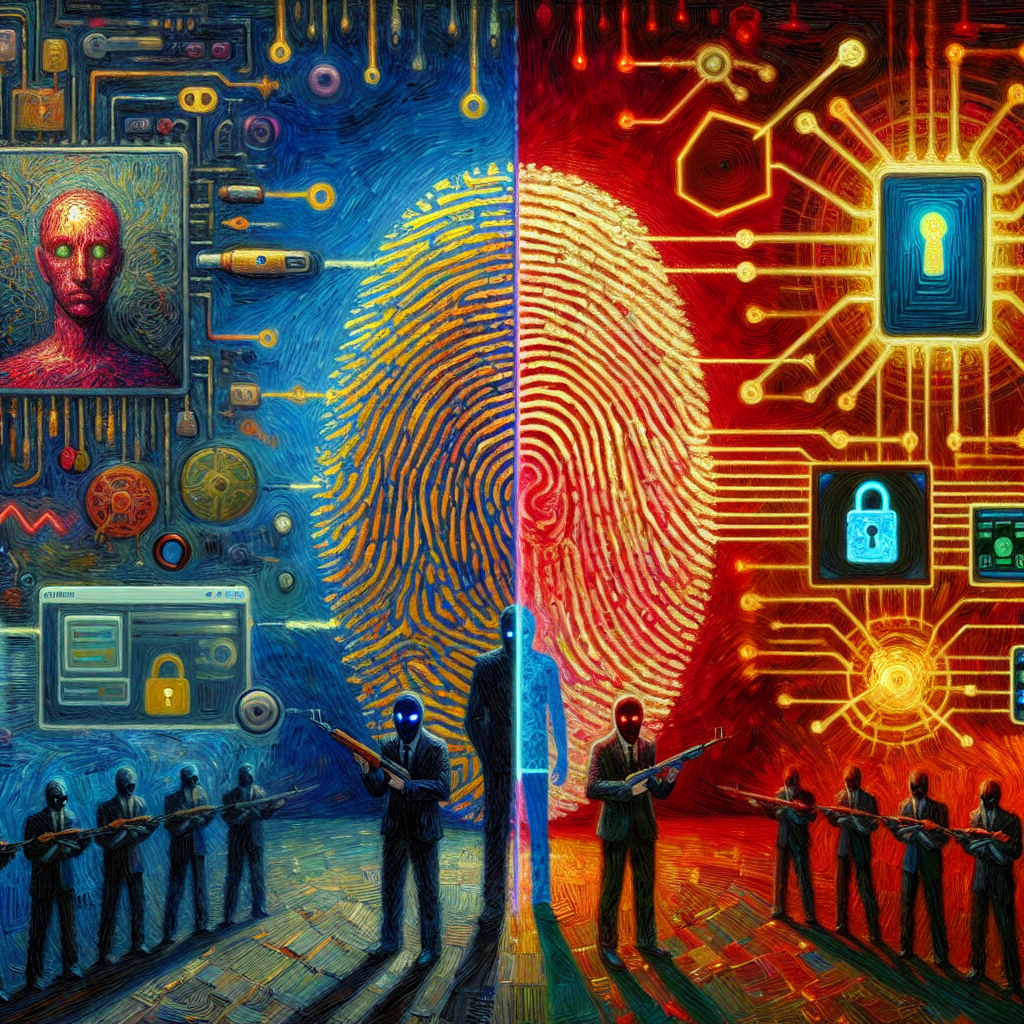
Other Resources
Here is a list of other resources you can review online to learn more:
- Avertium
- Secuvant
- TruAdvantage
- CYDERES
- Mazars USA
- Shanghai Moule Network Technology Co.
- Integrity IT
- Sheridan Computers
- LiveJournal
- Align Communications
- Cyberattack Information Sheet
- Instapaper
- GiaSpace Inc
- Kudelski Security
- Tech Lock
- Arctic Wolf Networks
- Cyberforce Security
- onShore Security
- Appalachia Technologies
Use This Prompt To Get More Resources With Your Favorite Online AI Tool: Please provide me with a list of online articles with their URLs in a bulleted list that I can read regarding How AI Is Transforming Government Threat Intelligence Sharing

Other Resources
Glossary Terms
How AI Is Transforming Government Threat Intelligence Sharing – Glossary Of Terms
1. AI (Artificial Intelligence): Technology that simulates human intelligence processes by machines, especially computer systems.
2. Threat Intelligence: Information that helps organizations understand potential threats, including their origins and impacts.
3. Data Sharing: The practice of distributing or providing access to data between organizations to enhance understanding and response to threats.
4. Machine Learning: A subset of AI that allows systems to learn from data and improve their performance over time without explicit programming.
5. Cybersecurity: Measures and processes designed to protect computer systems, networks, and data from damage, theft, or unauthorized access.
6. Predictive Analytics: Techniques that use statistical algorithms and machine learning to identify the likelihood of future outcomes based on historical data.
7. Information Collaboration: The process of multiple parties working together, sharing information to enhance decision-making and threat response.
8. Automated Reporting: Systems that generate threat reports without manual input, improving efficiency in intelligence sharing.
9. Real-time Analysis: The capability to analyze data as it is generated, allowing for immediate response to emerging threats.
10. Cloud Computing: Internet-based computing that provides shared resources and data access, facilitating collaboration in threat intelligence.
11. Open Source Intelligence (OSINT): Information collected from publicly available sources used to support security intelligence.
12. Incident Response: The approach taken by organizations to prepare for, detect, and respond to cybersecurity incidents.
13. Interoperability: The ability of different systems and organizations to work together effectively and share information.
14. Threat Actor: An individual or group engaged in malicious activities targeting systems or networks.
15. Vulnerability Assessment: The process of identifying, quantifying, and prioritizing vulnerabilities in systems or networks.
16. Malware: Malicious software designed to harm, exploit, or otherwise compromise electronic devices or information systems.
17. Phishing: A deceptive practice aimed at obtaining sensitive information via fraudulent electronic communications.
18. Cyber Threat Landscape: The overall picture of potential threats and vulnerabilities facing an organization or sector.
19. Data Privacy: Protection of personal or sensitive information from unauthorized access or disclosure.
20. Network Security: Measures taken to protect the integrity, confidentiality, and availability of computer networks.
21. Data Analytics: The process of examining data sets to draw conclusions about the information they contain.
22. Information Security: The practice of protecting information from unauthorized access or alteration.
23. Distributed Ledger Technology (DLT): A database system that is spread across multiple locations to enhance transparency and reduce fraud.
24. User Behavior Analytics (UBA): The process of using data analysis to identify patterns in user behavior that may indicate threats.
25. Intelligence Cycle: The process of gathering, analyzing, and disseminating intelligence information to inform decision-making.
26. Threat Landscape Mapping: The visual representation of existing and emerging threats within a specific context or organization.
27. Risk Management Framework: A structured approach for identifying, assessing, and prioritizing risks associated with cybersecurity threats.
28. Artificial Neural Networks: Computing systems inspired by biological neural networks, used in machine learning and AI applications.
29. Security Operations Center (SOC): A facility for security professionals to monitor networks for suspicious activity and respond to security incidents.
30. Public-Private Partnership: Collaborative arrangements between government entities and private organizations to share intelligence and enhance security efforts.

Glossary Of Terms
Other Questions
How AI Is Transforming Government Threat Intelligence Sharing – Other Questions
If you wish to explore and discover more, consider looking for answers to these questions:
- What specific types of AI models are being used for government threat intelligence sharing?
- How accurate are AI-driven threat detections and what are the rates of false positives and false negatives?
- How do agencies validate and verify the intelligence produced by AI systems?
- What safeguards prevent AI systems from reinforcing or amplifying existing biases?
- How is sensitive citizen data protected when it’s processed or shared by AI platforms?
- Which legal and regulatory frameworks govern AI-based intelligence sharing across jurisdictions?
- How do international data protection laws (e.g., GDPR) affect cross-border threat intelligence exchange?
- How is consent handled when intelligence is drawn from social media or other public sources?
- What transparency measures are in place to explain AI decisions to the public and to partner agencies?
- How are audit trails and accountability maintained for AI-driven decisions and actions?
- Who is ultimately responsible when an AI system’s recommendation causes harm or a mistaken action?
- What mechanisms exist for individuals to challenge or appeal adverse outcomes caused by AI misclassification?
- How do agencies ensure interoperability between different AI platforms and legacy systems?
- What standards or data formats (e.g., STIX/TAXII) are being used to share intelligence reliably?
- How are vendors and third-party providers evaluated and managed to avoid vendor lock-in?
- What measures protect AI systems from adversarial manipulation or data poisoning?
- How frequently are the AI models retrained or updated, and how are updates validated?
- What role do humans play in the loop—when are analysts required to approve AI findings?
- How are resource-constrained agencies or smaller governments supported to adopt AI capabilities?
- What are the costs (initial and ongoing) of deploying and maintaining AI threat-intelligence systems?
- How does AI handle misinformation, disinformation, and deliberate deception campaigns?
- How is provenance and confidence scoring of collected intelligence communicated to recipients?
- What metrics are used to measure the effectiveness and impact of AI-enabled intelligence sharing?
- How are privacy-preserving techniques (e.g., anonymization, differential privacy) applied in practice?
- What training and workforce development are needed for analysts to work effectively with AI tools?
- How are ethical frameworks and oversight boards structured to supervise AI use in security contexts?
- How do agencies balance the trade-off between surveillance capabilities and civil liberties?
- What protocols exist for emergency responses and rapid escalation when AI detects imminent threats?
- How is public trust built and measured when governments deploy AI for security purposes?
- Are there examples or case studies showing successful inter-agency or international AI-enabled collaboration?
- How do agencies prevent mission creep or scope expansion of AI surveillance beyond intended uses?
- How is sensitive intelligence compartmentalized to limit unnecessary exposure across partners?
- What legal recourse and protections exist for whistleblowers who expose misuse of AI systems?
- How are model explainability and interpretability balanced with operational secrecy and security?
- What contingency plans exist if AI systems fail or are taken offline during critical incidents?
- How do governments ensure equitable access to AI tools and avoid widening capability gaps between regions?
- What role do standards bodies, civil society, and independent auditors play in certifying AI systems?

Other Questions
Haiku
How AI Is Transforming Government Threat Intelligence Sharing – A Haiku
AI in our midst,
Uniting to share truths,
Fostering our peace.

Haiku
Poem
How AI Is Transforming Government Threat Intelligence Sharing – A Poem
In shadows cast by digital seas,
Where threats weave webs and silence flees,
AI rises, a vigilant light,
Uniting forces to guard the night.
Imagine neighbors, eyes alert,
In small-town streets, where dangers flirt,
They share their warnings, bonds entwined,
In cybersecurity, a similar kind.
With data vast and knowledge profound,
AI analyzes, patterns abound,
It’s not just numbers; it’s hearts and dreams,
Transforming tech into community beams.
Yet ethical dilemmas subtly creep,
Trust in machines, a promise we keep,
As algorithms judge, can we still find grace?
In the march of progress, let’s hold our place.
Collaboration echoes through walls so tall,
Agencies unite, answering the call,
With real-time updates, like thunder’s roar,
Together we stand, prepared to explore.
Each story shared, a thread in the weave,
Of human lives that believe and perceive,
With transparency guiding, confidence grows,
In the symphony of trust, the future glows.
So let’s embrace AI as a friend,
Crafting a world where vigilance won’t end,
In this tapestry of hope and fight,
Together we rise, in the digital light.

Poem
Checklist
How AI Is Transforming Government Threat Intelligence Sharing – A Checklist
Emotional Appeal
✅______ Share personal stories of cybersecurity professionals as community heroes.
✅______ Highlight the emotional impact of collective safety in the face of threats.
Rational Appeal
✅______ Explain how AI improves data analysis speed and accuracy.
✅______ Provide statistics on threat mitigation through AI-enhanced intelligence sharing.
Ethical Appeal
✅______ Discuss the ethical implications of AI use in surveillance and privacy.
✅______ Encourage transparency in AI algorithms to build public trust.
Authority Appeal
✅______ Cite expert opinions on the effectiveness of AI in cybersecurity.
✅______ Include case studies of successful AI implementation in government agencies.
Narrative Appeal
✅______ Use relatable analogies, such as the neighborhood watch, to explain AI’s role.
✅______ Incorporate success stories from other municipalities or organizations.
Social Appeal
✅______ Promote community engagement in AI discussions to foster shared responsibility.
✅______ Emphasize collaborative spirit across agencies and geographical boundaries.
Call to Action
✅______ Encourage readers to support AI integration for safer communities.
✅______ Advocate for active participation in discussions about AI ethics in government.

Checklist
At BestCyberSecurityNews, we help teach entrepreneurs and solopreneurs the basics of cybersecurity and its impact on their businesses by using simple concepts to explain difficult challenges.
Please read and share any of the articles you find here on BestCyberSecurityNews with your friends, family, and business associates.