


Transforming Precision: Ai’s Speed And Trust Redefine Flaw Detection
By Tom Seest
At BestCyberSecurityNews, we help teach entrepreneurs and solopreneurs the basics of cybersecurity and its impact on their businesses by using simple concepts to explain difficult challenges.
Please read and share any of the articles you find here on BestCyberSecurityNews with your friends, family, and business associates.
Automated AI That Finds and Fixes Flaws Faster Than Humans Can Blink
In today’s chaotic digital landscape, where every keystroke and connection opens the door to potential breaches, the quest for security can sometimes feel like hunting for a needle in a haystack—fraught with uncertainty and urgency. Enter the age of automated AI, a groundbreaking development that promises to identify and rectify flaws in cybersecurity faster than the blink of an eye, forging a path toward a safer virtual world.
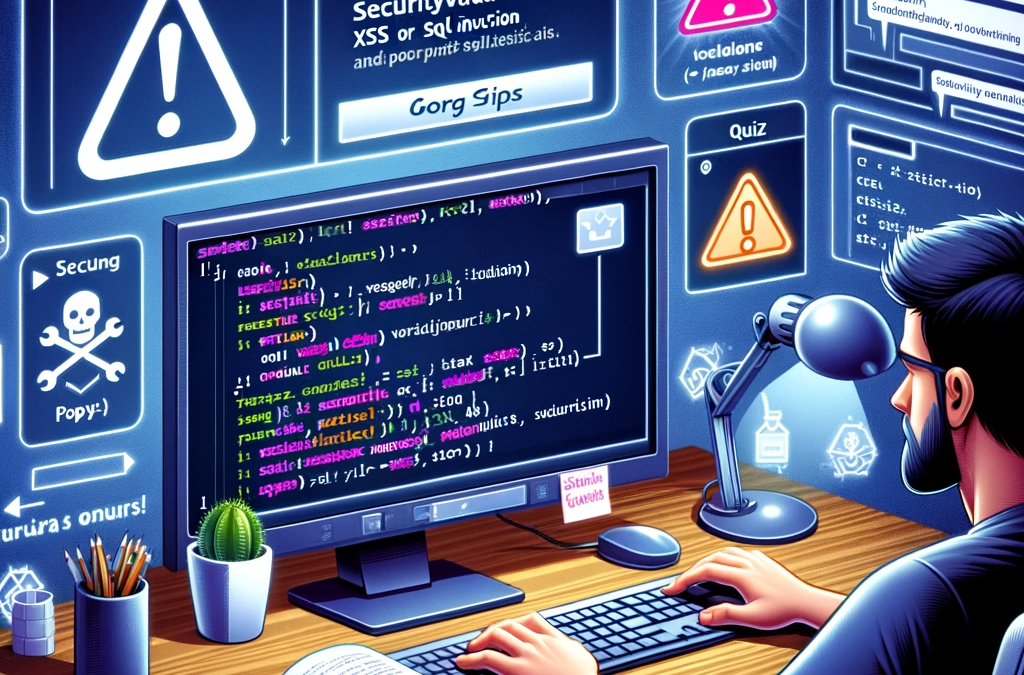
Picture this: a seasoned technician, the hands steady but the mind racing, sifts through countless lines of code, their eyes flickering across the screen beneath the warm glow of their monitor. Yet, even the most skilled human can miss that one critical error that could expose sensitive data to the wrong hands. Now, imagine a machine that not only sees everything but also learns from its experiences, tirelessly analyzing patterns that would take humans lifetimes to decipher. This isn’t science fiction; it’s the reality we are stepping into.
Automated AI finds flaws quickly, but its real power lies in how it shifts the paradigm of cybersecurity from a reactive to a proactive stance. We’re not just patching holes; we’re anticipating storms. Think of it like an experienced fireman who doesn’t wait for flames to erupt but actively inspects and maintains fire alarms, sprinklers, and exits. This automation acts as our digital smoke detector, providing an early warning system that protects our data before a breach occurs.
But it’s not only about the technology; it’s about trust. There’s an innate anxiety when it comes to placing our faith in an automated system, yet evidence shows that machines don’t get fatigued, distracted, or overwhelmed. They embrace the ceaseless challenge of cybersecurity, continuously adapting and updating—like having a tireless guardian watching over our digital assets.
Some might argue that a human touch is irreplaceable, and they aren’t wrong. We thrive on interpersonal connections; we’re social creatures at heart. However, consider this: when technology and humanity work hand in hand, it leads to stronger outcomes. We reclaim precious time—time that can be spent nurturing relationships, innovating ideas, or exploring uncharted territories in our craft.
As we usher in this era of automated AI, it invites us to foster a culture of collaboration between human expertise and machine efficiency. By embracing these advancements, we can protect our communities and amplify our impact, transforming cybersecurity from a daunting task into a shared mission. Let’s not just keep our digital spaces safe; let’s inspire a movement where security fosters creativity and innovation, empowering us all to flourish in an interconnected world.

Automated AI That Finds and Fixes Flaws Faster Than Humans Can Blink
Automated AI That Finds and Fixes Flaws Faster Than Humans Can Blink
- The digital landscape poses security challenges, resembling a quest for a needle in a haystack.
- Automated AI enhances cybersecurity by quickly identifying and rectifying vulnerabilities.
- AI’s ability to learn from experiences allows it to analyze complex patterns beyond human capability.
- This technology shifts cybersecurity from a reactive to a proactive approach, anticipating threats before they occur.
- Trust in automated systems can be challenging; however, machines do not fatigue or get overwhelmed.
- Collaboration between human expertise and AI leads to greater efficiency and allows humans to focus on innovative pursuits.
- Embracing automated AI fosters a culture of shared responsibility in cybersecurity, encouraging creativity and innovation.

Automated AI That Finds and Fixes Flaws Faster Than Humans Can Blink
Table Of Contents
- Automated AI That Finds and Fixes Flaws Faster Than Humans Can Blink
- What If AI Could Enhance Our Understanding Of Complex Flaws?
- Can Automated AI Truly Outperform Human Intuition In Flaw Detection?
- Is It Ethical to Trust AI Over Human Expertise In Flaw Resolution?
- What Stories Illustrate the Transformative Power Of AI In Flaw Fixing?
- How Can We Ensure AI Aligns with Our Values While Solving Flaws?
- What Social Implications Arise From Relying on AI for Flaw Detection?
- How Do We Balance Efficiency and Accuracy When Using Automated Ai?
- Conclusion
- Other Resources
- Glossary Of Terms
- Other Questions
- Haiku
- Poem
- Checklist
What If AI Could Enhance Our Understanding Of Complex Flaws?
Imagine walking into a room filled with darkness, with shadows flickering like doubts in your mind. That’s how many of us feel when we confront the intricate web of cybersecurity. Just like the dimly lit corners harbor hidden dangers, the complexities of digital security are filled with vulnerabilities that demand our attention. We’ve all heard stories—of businesses brought to their knees by a single exploit or families devastated by identity theft. These aren’t just headlines; they are real tragedies that echo through our lives, often too close for comfort.
Now, consider for a moment the potential of artificial intelligence to shine a light into those dark corners. AI has the power to sift through mountains of data faster than a human ever could, revealing hidden patterns and flaws that might otherwise go unnoticed. Picture an experienced detective who can spot the tiniest inconsistency in a crime scene—a forensic mind trained to uncover the truth. That’s what AI can do for cybersecurity, enhancing our understanding and revealing vulnerabilities lurking beneath the surface.
What if, instead of being victims of our technology, we could become its savvy guardians? By leveraging AI, we could transform our roles from passive users to proactive protectors. This isn’t just a technical shift; it’s a profound change in mindset. We’d stop viewing cybersecurity merely as a necessary difficulty and start seeing it as a sacred duty—an ethical responsibility to safeguard not only our data but also our communities. Each time we click “accept” on those endless terms and conditions, we’re putting trust in systems designed by human minds. With AI enhancing our understanding, that trust becomes more informed, and our actions more deliberate.
Yet, let’s not forget the human element. The world runs on stories, and there’s a powerful narrative in empowerment. For instance, think of the small business owner who, after a devastating breach, decided to take control of her narrative. With the insights gained from AI, she created a barrier not just for herself, but for her entire network—educating fellow entrepreneurs on the importance of cybersecurity.
This newfound understanding will foster connections within our communities, creating a collective effort toward security that resonates at an emotional level. It’s not about fear; it’s about resilience. It’s about knowing we have the tools to turn the tide against complex flaws, paving the way for a future where cybersecurity is less of a burden and more of a shared journey. And in that journey, trust in technology will be our greatest ally. Let’s embrace the power of AI—not just as observers, but as active participants in shaping a safer digital landscape.

What If AI Could Enhance Our Understanding Of Complex Flaws?
What If AI Could Enhance Our Understanding Of Complex Flaws?
- Cybersecurity often resembles navigating through darkness with hidden vulnerabilities.
- Many individuals and businesses face significant risks, including identity theft and exploitation.
- Artificial intelligence can rapidly analyze data, uncovering unnoticed patterns and vulnerabilities.
- AI empowers users to become proactive guardians of their digital security.
- Shifting the mindset towards viewing cybersecurity as a shared ethical responsibility enhances community awareness.
- The human element and storytelling play a crucial role in fostering resilience and empowerment.
- Embracing AI enables a collective effort to create a safer digital landscape.

What If AI Could Enhance Our Understanding Of Complex Flaws?
Can Automated AI Truly Outperform Human Intuition In Flaw Detection?
In a world increasingly dominated by technology, the question of whether automated AI can surpass human intuition in flaw detection strikes at the very core of our relationship with machines. Imagine a seasoned craftsman standing before a piece of fine furniture. He runs his hands over the wood, feeling its texture as he listens to its stories—stories of the grain, the knots, and the imperfections that tell a deeper tale of character. It’s in these nuances that human intuition thrives, transforming mere observation into profound understanding.
Yet, in the realm of cybersecurity, where the stakes are often unquantifiable and errors can cost millions, the allure of automation is undeniably strong. Machines can sift through terabytes of data in the blink of an eye, identifying anomalies that might elude even the most trained human eye. They analyze patterns with an accuracy that seems almost superhuman. But can they truly mimic the gut feeling we get when something’s off, an instinct that has been honed over centuries of human experience?
Take a moment to consider the story of a security analyst who discovered a flaw in a major software system. While the automated tools flagged countless potential threats based on algorithms, it was his intuition—backed by years of experience—that led him to probe deeper into a seemingly benign code snippet. That nagging suspicion transformed into a groundbreaking discovery that safeguarded sensitive data from a looming Cybersecurity breach. This is not just about machines versus humans; it’s about the harmony of both working together.
Engaging with technology requires a fundamental understanding of our values. Is it ethical to rely solely on algorithms, letting them dictate our responses without human oversight? When flawed thinking clouds our judgment, the very essence of our decision-making processes becomes compromised. Trust does not stem from speed alone; it emerges from the assurance that our systems are as human at their core as they are technological.
As we embrace automated AI in flaw detection, we must remember that technology is our ally, not our replacement. Integration of human intuition with the efficiency of AI could lead to a new era of security—a partnership where machines handle the mechanical load, while we, the custodians of our knowledge and instinct, navigate the moral complexities of our choices. We must take action toward this synergy, fostering an environment where both can thrive and, in doing so, fortifying the foundations of our digital world.

Can Automated AI Truly Outperform Human Intuition In Flaw Detection?
Can Automated AI Truly Outperform Human Intuition In Flaw Detection?
- The potential of automated AI in flaw detection raises questions about the relationship between humans and machines.
- Human intuition, exemplified by a craftsman’s ability to perceive nuances, plays a critical role in understanding complex systems.
- In cybersecurity, automated tools can quickly identify data anomalies that might be missed by humans.
- However, machines may not replicate the instinctual gut feelings developed through human experience.
- A security analyst’s intuition led to the discovery of a critical flaw, highlighting the importance of human oversight.
- Ethical considerations arise when relying solely on algorithms without human judgment, affecting decision-making quality.
- Successful integration of human intuition with AI efficiency can enhance security and decision-making in digital environments.

Can Automated AI Truly Outperform Human Intuition In Flaw Detection?
Is It Ethical to Trust AI Over Human Expertise In Flaw Resolution?
Is It Ethical to Trust AI Over Human Expertise in Flaw Resolution?
In the ever-evolving landscape of technology, one might wonder: can we genuinely place our faith in AI to troubleshoot problems that once relied solely on human expertise? This question resonates deeply, drawing upon our shared experiences and the intricate fabric of trust we weave in our lives. Consider a moment from a bustling cybersecurity team, where human instincts and machine algorithms come together in a delicate dance, each with its strengths and shortcomings.
Picture a veteran cybersecurity analyst, sleeves rolled up, combing through lines of code as many do at their desks. She has years of experience, a wealth of knowledge, ready to decipher nuances that machines might overlook. Yet, beside her, an AI tool analyzes data patterns in seconds, flagging anomalies with an efficiency that can make any human feel outdated. The choice seems stark: rely on decades of human wisdom or embrace the relentless efficiency of artificial intelligence.
This dichotomy invites a deep reflection on trust. Trust isn’t simply a matter of blind faith; it’s built on shared experiences, accountability, and results. When problems arise, we yearn for assurance that our systems—the very essence of our cybersecurity—are safeguarded by the right hands, or circuits. AI offers a formidable ally, but it lacks the emotional intelligence and ethical considerations that only human minds can provide. Can we truly trust a tool that cannot appreciate the real-world implications of its decisions?
Now consider the tale of a young entrepreneur who relied heavily on AI for customer service. He watched in horror as his AI misinterpreted tone, leading to a public relations crisis. It was a wake-up call—he realized that while AI can tackle countless inquiries, it cannot empathize or understand the delicate dance of human interaction. He turned back to his team, embracing their insights to guide the technology instead of letting it lead.
In a world saturated with data and driven by algorithms, we must harness the strengths of both AI and human expertise. It’s not about replacing one with the other but about finding harmony between man and machine. Trust, therefore, is not just ethical; it’s integral. It requires a balanced approach, where our collective wisdom guides the technology, ensuring that cybersecurity—our digital lifeline—remains robust, resilient, and above all, human-centric. Embracing this duality inspires confidence and bolsters our ability to resolve flaws effectively. Let’s cultivate a relationship where trust in technology is combined with the irreplaceable value of nuanced human judgment.

Is It Ethical to Trust AI Over Human Expertise In Flaw Resolution?
Is It Ethical to Trust AI Over Human Expertise In Flaw Resolution?
- The growing reliance on AI raises questions about trust in technology versus human expertise.
- Cybersecurity teams exemplify the interplay of human intuition and machine efficiency.
- Experienced analysts possess knowledge that AI may overlook, leading to a dilemma in decision-making.
- Trust in technology is built on accountability and results, not just faith.
- AI lacks emotional intelligence and cannot understand real-world implications of its actions.
- Balancing AI efficiency with human insight is crucial for effective problem resolution.
- Establishing a partnership between AI and human judgment can enhance cybersecurity resilience.

Is It Ethical to Trust AI Over Human Expertise In Flaw Resolution?
What Stories Illustrate the Transformative Power Of AI In Flaw Fixing?
In a world where we rely on technology for everything from communication to healthcare, imagine a scenario where a small business owner, Jane, fights against ever-evolving cyber threats. One day, she receives an alarming notification about a data breach. Heart racing, she fears the loss of trust from her customers, the very lifeline of her endeavor. This is where the transformative power of AI becomes not just a tool, but a lifeline, breathing new hope into her challenging situation.
Suddenly, AI steps into the spotlight as a vigilant guardian, tirelessly analyzing patterns in cybersecurity. It detects anomalies faster than any human could, recognizing potential threats that could cripple Jane’s business. This isn’t just about convenience; it’s a matter of survival, a chance for her to reclaim control over her life’s work. Every transaction made, every relationship built, now fortified by an AI that learns and adapts with incredible precision.
The journey of integrating AI into flaw fixing isn’t just a tale of technology; it’s a narrative woven into the fabric of human experience. One day, Jane recounts how, after implementing AI-driven cybersecurity protocols, she noticed not just improvements in her systems but a profound shift in her mindset. No longer consumed by paranoia, she could focus on her passion: creating beautiful products that resonate with her community. The sense of safety provided by AI allows for creativity to thrive, illustrating that when technology complements human endeavor, remarkable things happen.
But the ethical landscape also shifts under AI’s influence. As Jane embraces this technology, she realizes it’s not just her business at stake—it’s a responsibility to protect the data of her customers, their stories intertwined with hers. Here, AI fosters a trust that is often absent in the digital age. It doesn’t just fix flaws; it builds connections, grounding her in a shared ethical commitment to safeguard individual privacy amidst the chaos of cyber threats.
As Jane’s story illustrates, AI doesn’t just mend the cracks in our defenses; it transforms our approach to risks. It empowers small businesses and large corporations alike to face challenges with renewed confidence, letting them pivot towards innovation rather than retreat from fear. It’s not about replacing human effort; it’s about elevating it, about standing shoulder to shoulder with technology as a partner in progress. And in that partnership, we find trust, courage, and a future unburdened by the weight of forgotten vulnerabilities.

What Stories Illustrate the Transformative Power Of AI In Flaw Fixing?
What Stories Illustrate the Transformative Power Of AI In Flaw Fixing?
- Jane, a small business owner, faces cybersecurity threats and receives a notification about a data breach.
- AI emerges as a critical tool, analyzing cybersecurity patterns and detecting threats more effectively than humans.
- Integration of AI results in significant improvements in Jane’s business, restoring her control and focus on creativity.
- AI-driven protocols provide a sense of safety, enabling Jane to create products that resonate with her community.
- The ethical responsibility of protecting customer data becomes paramount as Jane embraces AI technology.
- AI fosters a trust that enhances connections and safeguards individual privacy in the digital age.
- AI empowers businesses to face challenges confidently, promoting innovation and enhancing human efforts rather than replacing them.

What Stories Illustrate the Transformative Power Of AI In Flaw Fixing?
How Can We Ensure AI Aligns with Our Values While Solving Flaws?
When considering the landscape of artificial intelligence, we find ourselves standing at a fascinating crossroads—a juncture where technology meets humanity. Imagine AI as a powerful tool, akin to a trusty old tractor on a sprawling farm. Without proper guidance and care, that machine can create as many problems as it solves. To ensure that AI aligns with our values while addressing its inherent flaws, we must approach this challenge with a blend of heartfelt commitment, rational examination, and ethical foresight.
At its core, the issue isn’t merely about algorithms and data; it’s about people and the lives we lead. Picture a quiet town where a dedicated police officer knows every resident by name. This connection fosters trust and accountability, mirroring how we must treat AI—like a community member rather than a distant entity. When developing and deploying AI, we need to embed the same level of character and integrity that any responsible citizen would display. This means establishing robust guidelines that prioritize transparency, inclusivity, and respect for human dignity.
What if we approached AI development not just as a technical endeavor but as a collective mission? We need diverse voices at the table, representing a spectrum of experiences and perspectives. Just as a farmer relies on the combined efforts of their workers, we must engage experts from cybersecurity to ethics to ensure our innovations reflect a wide array of human values. When we include various viewpoints, we create a richer tapestry of understanding, helping AI not only function effectively but resonate with our shared sense of purpose.
Emotional appeals also play a significant role. Consider the story of a firefighter bravely rescuing a trapped animal from a burning building; this narrative resonates deeply within us. It reminds us that in critical moments, our humanity defines our actions. Similarly, as we develop AI, we must never lose sight of the emotional impact our technologies can have on individuals and communities. We should prioritize building systems that enhance lives rather than degrade them, steering clear of the pitfalls of bias and misinformation that can undermine social cohesion.
Ultimately, our journey with AI should inspire trust and confidence. Imagine a scenario where you walk into a local shop and the owner greets you warmly, genuinely interested in your day. That connection can only flourish when we prioritize ethical standards and an unwavering commitment to our shared values. By fostering an environment that values human oversight, ongoing dialogue, and accountability, we can guide AI to be a force for good, ensuring that it not only solves flaws within its own framework but also aligns beautifully with the principles we hold dear as a society.

How Can We Ensure AI Aligns with Our Values While Solving Flaws?
How Can We Ensure AI Aligns with Our Values While Solving Flaws?
- AI represents a crossroads of technology and humanity, needing careful guidance to maximize benefits and minimize problems.
- The focus should be on people and the values they hold, treating AI like a community member to foster trust and accountability.
- Developing AI requires robust guidelines prioritizing transparency, inclusivity, and respect for human dignity.
- Diverse perspectives are essential in AI development to enrich understanding and reflect a wide array of human values.
- Emotional impacts of AI technologies must be considered to enhance lives and prevent bias and misinformation.
- Trust in AI should be cultivated through ethical standards and a commitment to shared values within society.
- Human oversight, ongoing dialogue, and accountability are crucial for guiding AI to be a constructive force in society.

How Can We Ensure AI Aligns with Our Values While Solving Flaws?
What Social Implications Arise From Relying on AI for Flaw Detection?
In a world racing toward automation, we often overlook the human element that defines us. Relying on AI for flaw detection in various industries—from manufacturing to healthcare—sparks a complex dialogue about our social fabric. The allure of efficiency beckons like a siren’s song, promising precision and speed. However, it’s crucial to examine whether this embrace of technology risks numbing our instincts and diluting our moral compass.
Consider a small-town mechanic, who knows every car that rolls into his shop. He understands the weight of a mother’s hope as she leaves with her children, trusting that her vehicle is safe. When machines take over flaw detection, we risk replacing that intimate knowledge with algorithms. While these systems can identify wear and tear with unerring accuracy, they lack the stories behind each part, each repair. That human touch fosters trust—something algorithms can’t replicate. The mechanic’s relationship with his clients isn’t merely transactional; it’s built on understanding and accountability, qualities AI cannot embody.
Then there’s the matter of cybersecurity. There’s a stark reality that as we hand over the reins of quality control to programs, we simultaneously expose ourselves to vulnerabilities. The irony? In seeking greater reliability, we may inadvertently open doors to threats that the human eye—a skilled technician—might catch. This dependence on AI raises a vital question: who holds the responsibility when something fails? If we allow machines to make the calls, we risk losing our grip on accountability and decision-making in a way that could fracture trust in systems designed to keep us safe.
Moreover, imagine a world where mentorship is sidelined. The young apprentice learning the ropes, viewing a seasoned craftsman’s hands at work, gains not just skills but wisdom. This process of human learning fosters innovation and inspires generations. If AI becomes the sole arbitrator of flaw detection, we might stifle creativity and critical thinking, limiting our ability to adapt and resolve unforeseen challenges.
Relying solely on AI for flaw detection poses profound social implications by shaping our values and relationships. It’s more than a technical decision; it’s a reflection of who we choose to be. Balancing technology with human insight will assure that we remain custodians of our crafts, blending precision with the heart and soul of our shared experiences. Let’s harness technology, not as a replacement but as an enhancement, ensuring we continue to tell stories with every endeavor while safeguarding our essence in this journey.

What Social Implications Arise From Relying on AI for Flaw Detection?
What Social Implications Arise From Relying on AI for Flaw Detection?
- Automation risks overshadowing the importance of the human element in industries.
- AI in flaw detection raises concerns about diminishing instincts and moral responsibility.
- Human relationships foster trust, which algorithms cannot replicate.
- Reliance on AI increases cybersecurity vulnerabilities, potentially leading to accountability issues.
- Mentorship and the transfer of wisdom are at risk if AI dominates quality control.
- Overdependence on AI could stifle creativity and limit problem-solving abilities.
- Balancing technology and human insight is crucial for preserving values and relationships.

What Social Implications Arise From Relying on AI for Flaw Detection?
How Do We Balance Efficiency and Accuracy When Using Automated Ai?
In an age where automation and artificial intelligence dominate the landscape, we often find ourselves at a crossroads when it comes to balancing efficiency and accuracy. It’s a familiar tug-of-war, like watching a seasoned craftsman at work—tools at his side, eyes focused, yet aware that haste can lead to costly mistakes. Picture a locksmith, meticulously crafting each pin and tumbler, ensuring that a key fits perfectly. He knows that while a machine can churn out keys faster than he ever could, it lacks the nuanced understanding of what makes a lock truly secure—the very principles that guide his hands.
When we turn our attention to sectors like cybersecurity, this balance becomes even more critical. After all, the stakes are high. A single misstep in a code designed to protect sensitive information could lead to the unspeakable—a breach that compromises our data and, ultimately, our trust. Imagine a small business owner, pouring heart and soul into their work, only to be undermined by an automated system that missed a glaring vulnerability. They didn’t just lose money; they lost the faith of their customers, which is far more difficult to rebuild.
Efficiency in AI brings to mind breathtaking speed and massive data processing capabilities, like a high-speed train barreling down the tracks. But what happens when that train misses a stop? With lightning-fast decisions made by algorithms, we risk adopting a ‘set it and forget it’ mentality—an ethos that can lead us to overlook the finer details that matter. It’s not just about how fast we can act; it’s about ensuring the pillars supporting our actions are solid.
Now, consider the narrative of a small tech startup in a vibrant community, working tirelessly to develop AI that enhances public safety. They embrace automated systems but structure them to work hand-in-hand with human oversight, believing that wisdom often emerges not just from data points but from stories and lived experiences. This blend of man and machine fosters connection, trust, and an ethical obligation to protect not just systems, but the people who rely on them.
Striking the right balance between efficiency and accuracy isn’t simply a technical problem; it’s a human one. It demands an understanding that technology should serve humanity—not the other way around. The real challenge lies in weaving together the rapid pace of automation with the irreplaceable human touch that ensures we don’t lose our way amidst progress. Before we leap forward, let’s pause and ask ourselves: in our quest for speed, are we compromising the very values we hold dear? Balancing efficiency and accuracy isn’t just a goal; it’s a moral imperative.

How Do We Balance Efficiency and Accuracy When Using Automated Ai?
How Do We Balance Efficiency and Accuracy When Using Automated Ai?
- Automation and AI create challenges in balancing efficiency and accuracy.
- Craftsmanship exemplifies the need for careful attention to detail over speed.
- Cybersecurity highlights the high stakes of missteps in automated systems.
- Fast algorithms can lead to a ‘set it and forget it’ mindset, overlooking important details.
- Successful AI integration involves human oversight and lived experiences.
- Technology should serve humanity, ensuring ethical considerations are prioritized.
- Striking a balance between efficiency and accuracy is a moral imperative.

How Do We Balance Efficiency and Accuracy When Using Automated Ai?
Conclusion
In this digital age, where the threat landscape evolves at a dizzying pace, finding refuge in automated AI for flaw detection isn’t just a technological leap; it’s about reclaiming our peace of mind. Imagine standing in a bustling workshop, surrounded by experts—each engrossed in their craft, honing their skills with years of experience etched into their very bones. Yet, no matter how seasoned we are, there are moments when even the sharpest eye misses a critical flaw. Now, envision a tireless assistant, powered by AI, tirelessly scanning every surface, every line of code, identifying errors that could lead to catastrophic consequences before we even have a chance to blink.
This isn’t merely about machines overthrowing human intuition; it’s about a union where speed complements depth. We’ve all heard stories—like that of a small business owner whose dreams were nearly extinguished by a cyber breach. With AI as her early warning system, she transformed that fear into fortitude, equipping herself not just to survive, but to lead the charge in her community, safeguarding those around her. Moments like these remind us that while these technological tools provide unparalleled efficiency, they also rekindle responsibility.
Trust in technology invokes a complex mix of emotions, often teetering on the edge of hope and anxiety. How do we encourage that trust? Through transparency, engagement, and cooperative oversight. It’s about recognizing AI as an ally, not a replacement. The ideal partnership lies at the intersection of human ingenuity and machine precision, allowing us to rapidly address vulnerabilities while also nurturing the deeper connections that underpin our society.
As we navigate this new terrain, we must also embrace the ethical implications that arise. Imagine a scenario where AI not only complements our efforts but amplifies our values—respect for privacy, commitment to integrity, and above all, a shared sense of duty to safeguard what matters most. This duality fosters a resilient culture of cybersecurity where we can inspire confidence, galvanizing a community united in purpose.
Let’s not shy away from this transformative journey. Instead, let’s harness the power of AI as a tool to elevate our individual narratives and collective responsibilities. In doing so, we don’t just secure our cyber frontiers; we ignite a movement where innovation thrives within a framework of trust, collaboration, and ethical accountability. This is the dawn of a new era, one where we can face the complexities of digital flaws head-on, turning vulnerability into victory—together.

Conclusion
Conclusion:
- The evolving threat landscape necessitates the use of automated AI for flaw detection.
- AI serves as a vigilant assistant, identifying errors before they escalate into significant issues.
- This technology complements human intuition, enhancing efficiency without replacing it.
- Trust in AI can be bolstered through transparency, engagement, and cooperative oversight.
- Ethical implications of AI include respect for privacy and a commitment to integrity.
- AI can amplify human values and foster a resilient culture of cybersecurity.
- Embracing AI transforms vulnerability into strength, paving the way for innovative, collaborative solutions.
Conclusion
Other Resources

Other Resources
Here is a list of other resources you can review online to learn more:
- ReliaQuest
- CTG Tech
- eSecurity Solutions
- BlueVoyant
- Google Business Profile
- Kudelski Security
- CyberGuard360
- Novacoast
- True Digital Security
- Rehmann
- NDSE
- Anitian
- Infiltration Labs
- US itek
- CalTech
- JMARK Business Solutions
- Delta Risk
- Amnet
- Reliance ACSN Limited
- Masergy
Use This Prompt To Get More Resources With Your Favorite Online AI Tool: Please provide me with a list of online articles with their URLs in a bulleted list that I can read regarding Automated AI That Finds and Fixes Flaws Faster Than Humans Can Blink

Other Resources
Glossary Terms
Automated AI That Finds and Fixes Flaws Faster Than Humans Can Blink – Glossary Of Terms
1. Automated AI: Software systems that utilize artificial intelligence technologies to perform tasks without human intervention.
2. Flaw Detection: The process of identifying errors, defects, or imperfections in a system or process.
3. Machine Learning: A subset of AI that enables machines to learn from data and improve their performance over time without being explicitly programmed.
4. Data Analytics: The analysis of raw data to make conclusions and help in decision-making.
5. Deep Learning: A type of machine learning that uses neural networks with many layers to analyze various levels of data abstraction.
6. Algorithm: A set of rules or instructions given to an AI to help it learn on its own.
7. Real-time Processing: The capability of a system to process data and provide output almost instantaneously.
8. Predictive Analytics: Techniques that use statistical algorithms and machine learning to identify the likelihood of future outcomes based on historical data.
9. Quality Assurance: The systematic process of ensuring that products and services meet specified requirements and standards.
10. Error Correction: Techniques and mechanisms used to detect and rectify errors in data transmission or processing.
11. Robotic Process Automation (RPA): The use of software robots to automate highly repetitive and routine tasks typically performed by human workers.
12. Neural Network: A computational model inspired by the way biological neural networks in the human brain process information.
13. Big Data: Large, complex datasets that traditional data processing applications cannot adequately deal with.
14. Self-learning: The ability of AI systems to improve their performance by learning from new data without human intervention.
15. Continuous Integration: A software development practice that requires developers to integrate code into a shared repository frequently, allowing for automated testing and flaws identification.
16. Anomaly Detection: The identification of rare items, events, or observations that raise suspicions by differing significantly from the majority of the data.
17. Natural Language Processing (NLP): A field of AI focused on the interaction between computers and humans through natural language.
18. Feedback Loop: A process in which the output of a system is circled back and used as input, often used to improve AI performance.
19. User Acceptance Testing (UAT): The process of verifying that a solution works for the user and meets their needs and requirements.
20. Semantic Analysis: A process in NLP that involves understanding the intent and meaning behind human language.
21. Fuzzy Logic: A form of logic that handles the concept of partial truth, used in AI to approximate reasoning in uncertain situations.
22. Pattern Recognition: The ability of an AI to identify patterns and regularities in data.
23. Cognitive Computing: Simulated human thought processes in a computerized model to solve complex problems.
24. Test Automation: The use of software tools to execute tests on a software application automatically.
25. Error Rate: The frequency with which mistakes occur in a system, typically measured as a percentage.
26. Version Control: A system that records changes to files over time so that specific versions can be recalled later.
27. Incident Response: Procedures that outline how to handle unexpected disruptions or attacks in a system.
28. Deployment Pipeline: A set of automated processes that enables software delivery from development to production efficiently.
29. Scalability: The capability of a system to handle a growing amount of work or its ability to accommodate growth.
30. Performance Metrics: Standards of measurement used to assess the effectiveness and efficiency of AI and software systems.

Glossary Of Terms
Other Questions
Automated AI That Finds and Fixes Flaws Faster Than Humans Can Blink – Other Questions
If you wish to explore and discover more, consider looking for answers to these questions:
- How exactly does the AI detect different types of flaws (e.g., vulnerabilities, misconfigurations, logic errors)?
- What is the detection accuracy (false positive and false negative rates) in real-world environments?
- How fast does the AI find and fix flaws compared with expert human teams?
- What kinds of data and telemetry does the AI require to operate effectively?
- How is the AI trained and validated, and how often is it retrained?
- How does the system handle adversarial attacks or deliberately crafted inputs designed to evade detection?
- Can the AI explain its findings and remediation steps in a way humans can understand (explainability/interpretability)?
- When should a human be required to review or override the AI’s recommendations?
- Who is legally and ethically responsible if the AI’s automated fix causes an outage or data loss?
- How does the AI prioritize which flaws to fix first (risk scoring and business impact)?
- What safeguards prevent the AI from making harmful automated changes (rollback, staging, testing)?
- How is human expertise integrated into the AI workflow (human-in-the-loop processes)?
- How does the AI preserve user privacy and comply with data protection laws (GDPR, HIPAA, etc.)?
- What measures are in place to detect and mitigate bias in the AI’s detection and decision-making?
- How transparent are the AI’s data sources, models, and decision criteria to stakeholders and auditors?
- What audit logs and traceability mechanisms exist to review AI actions and fixes?
- How does the AI perform across different industries and technology stacks (cloud, on-prem, IoT)?
- What are the infrastructure, integration, and operational costs of deploying this AI?
- How does the AI scale with growing data volumes and expanding attack surfaces?
- What are the potential social and labor impacts (job displacement, skill shifts) of widespread adoption?
- How does the system prevent model poisoning, data drift, and degradation over time?
- What standards, certifications, or third‑party evaluations validate the AI’s effectiveness?
- How are false positives handled to avoid alert fatigue and wasted human effort?
- How are edge cases, novel exploits, and zero‑day vulnerabilities addressed?
- What governance framework oversees AI decision-making, access, and policy updates?
- How does the AI balance speed (efficiency) with thoroughness (accuracy) in remediation?
- How will vendors ensure interoperability and avoid vendor lock‑in?
- What metrics should organizations track to measure the AI’s ROI and impact on security posture?
- How are ethical tradeoffs (privacy vs. security, automation vs. human oversight) decided and communicated?
- What real-world case studies demonstrate successful detection and recovery using this AI?
- How does the AI handle sensitive or regulated data during analysis and remediation?
- What contingency plans exist if the AI itself is compromised or behaves unexpectedly?
- How can organizations train and upskill staff to work effectively alongside automated AI tools?
- What ongoing maintenance, monitoring, and testing schedules are recommended for safe operation?

Other Questions
Haiku
Automated AI That Finds and Fixes Flaws Faster Than Humans Can Blink – A Haiku
Flaws hide in shadows,
AI’s light reveals them fast—
Trust in craft and code.

Haiku
Poem
Automated AI That Finds and Fixes Flaws Faster Than Humans Can Blink – A Poem
In a realm where shadows loom and chaos reigns,
AI emerges, a guardian to shield against digital pains.
With eyes that miss not a flaw, it swiftly detects,
Transforming our struggle into a force that connects.
Like seasoned firemen who foresee the blaze,
Automated hearts scan through countless arrays,
Anticipating storms where once we felt dread,
Trusting machines to safeguard all that we’ve fed.
Amid algorithms, the human touch still thrives,
For wisdom and instinct fuel how each survives.
From despair to resilience, we learn, adapt, grow,
Empowered by technology, we forge our own flow.
Yet, ethical whispers remind us each day,
In this dance of progress, we must find our way.
For beneath the swift numbers and patterns that gleam,
Lies the heart of compassion, the spark of our dream.
Community blooms when we nurture our ties,
Education and insight become vital allies.
Not merely a quest for efficiency’s gain,
But a journey together, where trust will remain.
Let’s wield this bold power, not cast it aside,
For in harmony’s embrace, our spirits abide.
Together we flourish, brave souls intertwined,
In the tapestry of safety, our fates aligned.

Poem
Checklist
Automated AI That Finds and Fixes Flaws Faster Than Humans Can Blink – A Checklist
Checklist for Embracing Automated AI in Flaw Detection
✅______ Reflect on the personal stories of individuals and businesses that have benefited from AI in cybersecurity.
✅______ Consider the emotional impact of a data breach on individuals and communities, and how AI can provide peace of mind.
Rational Appeals
✅______ Evaluate the efficiency of AI in identifying flaws faster than human capabilities.
✅______ Examine case studies demonstrating AI’s accuracy in flaw detection compared to traditional methods.
Ethical Appeals
✅______ Assess the ethical considerations of relying on AI.
✅______ Ensure that AI systems are developed and deployed with transparency and accountability.
Authority Appeals
✅______ Research endorsements from cybersecurity experts on the effectiveness of automated AI.
✅______ Cite statistics on breach prevention success due to AI integration.
Narrative Appeals
✅______ Share compelling narratives of businesses transformed by AI, emphasizing proactive security measures.
✅______ Illustrate real-life scenarios showcasing the combination of human intuition and AI efficiency.
Social Appeals
✅______ Promote the idea of collaboration between humans and AI to foster community engagement in cybersecurity.
✅______ Encourage discussions on the shared responsibility of securing digital spaces for collective safety.
Action Items
✅______ Identify areas in your organization where automated AI can be integrated for better flaw detection.
✅______ Create a plan for ongoing education on AI and cybersecurity best practices for all team members.
✅______ Foster a culture that values both technological advancement and human input in decision-making processes.

Checklist
At BestCyberSecurityNews, we help teach entrepreneurs and solopreneurs the basics of cybersecurity and its impact on their businesses by using simple concepts to explain difficult challenges.
Please read and share any of the articles you find here on BestCyberSecurityNews with your friends, family, and business associates.


